Arabian Scimitar Meaning: History, Craftsmanship & Sword Legacy
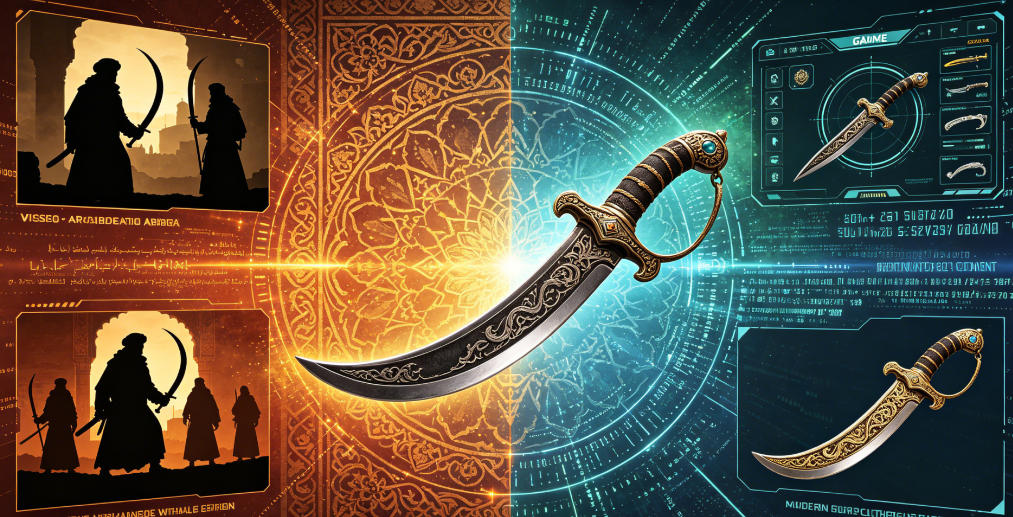
What Is an Arabian Scimitar Sword? History, Meaning, Craftsmanship and Cultural Legacy Explained
The Arabian Scimitar is one of the most recognizable swords in world history. With its elegant curved blade, powerful cutting ability, and rich cultural symbolism, the Scimitar sword has become an iconic representation of Middle Eastern warriors, ancient battles, and traditional sword craftsmanship.
For centuries, the Arabian Scimitar was more than a weapon. It represented strength, honor, status, and cultural identity throughout the Middle East and surrounding regions. From skilled cavalry warriors to royal ceremonies, this legendary curved sword played an important role in both warfare and artistic expression.
But what exactly is an Arabian Scimitar sword? Why is the blade curved? How was it crafted? And why does this ancient Middle Eastern sword remain popular among collectors and history enthusiasts today?
This complete guide explores the Arabian Scimitar meaning, history, design, craftsmanship, fighting techniques, and cultural legacy behind one of the world's most famous curved swords.
What Is an Arabian Scimitar Sword?
An Arabian Scimitar is a type of curved single-edged sword traditionally associated with the Middle East, North Africa, and parts of Central and South Asia.
The term 'scimitar' is commonly used in English to describe various curved swords from these regions, including the Persian Shamshir, Arabic Saif, and other saber-style blades.
Unlike straight European swords that were often designed for thrusting attacks, the scimitar’s curved blade was optimized for fast slicing movements.
The typical features of an Arabian Scimitar include:
-
A curved single-edged blade
-
Lightweight construction
-
Sharp cutting edge
-
Forward-curved design
-
Comfortable grip for horseback combat
-
Decorative hilt and scabbard designs
The unique shape allowed warriors to perform powerful sweeping cuts while maintaining speed and mobility.

Arabian Scimitar History: From Ancient Warfare to Cultural Symbol
The history of the Arabian Scimitar sword is closely connected with the development of cavalry warfare across the Middle East.
Curved swords became especially valuable among mounted warriors because the blade’s shape naturally followed the movement of a rider’s arm during a strike.
Unlike heavier straight swords, a curved saber allowed:
-
Faster attacks from horseback
-
More efficient cutting motions
-
Better control during close combat
-
Reduced risk of the blade getting stuck after a strike
The scimitar became widely associated with famous Middle Eastern and Islamic civilizations, including Persian, Ottoman, and Arabian military traditions.
Over time, the sword evolved from a battlefield weapon into a symbol of:
-
Warrior honor
-
Leadership
-
Royal authority
-
Family heritage
-
Cultural pride
Many beautifully crafted swords were passed down through generations as valuable heirlooms.
Why Are Arabian Swords Curved?
One of the most common questions about the Scimitar sword is:
'Why are Middle Eastern swords curved?'
The curved design was created for practical combat advantages.
1. Better Cutting Performance
A curved blade creates a natural slicing motion when making contact with a target.
Instead of striking directly like a straight sword, the curved edge continues moving across the surface, increasing cutting efficiency.
2. Ideal for Cavalry Combat
The Arabian Scimitar was especially effective for mounted warriors.
When a horse rider moved quickly past an opponent, the curved blade allowed the warrior to deliver powerful attacks without needing a large swinging motion.
3. Lightweight and Fast
Compared with many heavy battlefield swords, the scimitar was designed for speed and agility.
Its balanced weight made it easier for skilled warriors to control during extended combat.
This combination of speed, mobility, and cutting ability helped establish the reputation of the Arabian curved sword throughout history.
Arabian Scimitar Craftsmanship: The Art Behind the Blade
The creation of an authentic Arabian Scimitar sword required exceptional skill from master bladesmiths.
Traditional sword making involved multiple stages:
-
Selecting quality steel
-
Forging and shaping the blade
-
Heat treatment
-
Polishing and sharpening
-
Creating the handle
-
Decorating the sword fittings
The craftsmanship was not limited to the blade itself. The hilt, guard, and scabbard were often designed as artistic masterpieces.
Many historical scimitars featured:
-
Gold or silver decoration
-
Intricate engraving
-
Precious materials
-
Leather-wrapped handles
-
Decorative inscriptions
These details transformed the sword from a simple weapon into a symbol of wealth, status, and personal identity.
Damascus Steel Scimitar: The Legendary Blade Material
One of the most fascinating aspects of historical Middle Eastern swords is their connection with Damascus steel.
Damascus steel became famous because of its:
-
Beautiful flowing patterns
-
High durability
-
Excellent edge retention
-
Unique forging techniques
Many legendary Middle Eastern blades were admired for their ability to combine flexibility and sharpness.
The mysterious patterns found on Damascus blades made them highly valuable among warriors and collectors.
Today, modern sword makers continue to recreate Damascus steel scimitars because of their historical beauty and craftsmanship.
Arabian Scimitar vs Katana: What Makes These Legendary Swords Different?
The Arabian Scimitar and Japanese Katana are two of the most famous curved swords in world history. Although both weapons feature curved blades and are known for their cutting ability, they were developed in completely different cultures and for different fighting styles.
The Scimitar sword was designed primarily for fast slashing attacks, especially in mounted cavalry combat. The Japanese Katana was developed for samurai warriors who focused on precision, discipline, and close-range swordsmanship.
The major differences include:
Blade Design
Arabian Scimitar:
-
Single-edged curved blade
-
Designed for powerful slicing attacks
-
Often lighter and optimized for horseback combat
-
Commonly associated with Middle Eastern and Islamic warriors
Japanese Katana:
-
Curved single-edged blade
-
Designed for controlled cutting and quick drawing techniques
-
Traditionally forged with specialized Japanese sword-making methods
While both swords demonstrate the beauty of curved blade design, they represent two different approaches to sword craftsmanship.
The Scimitar emphasizes speed and battlefield mobility, while the Katana emphasizes precision, balance, and the philosophy of the samurai.

Famous Arabian Scimitars and Historical Sword Types
The term Arabian Scimitar actually describes a group of related curved swords rather than one single design.
Different regions developed their own versions of the curved Middle Eastern sword.
Saif (Arabic Sword)
The Saif is one of the most famous Arabic sword types.
The word 'Saif' simply means sword in Arabic and has been used to describe various traditional Arabian blades.
Historically, Saif swords could be straight or curved depending on the region and time period.
Shamshir (Persian Scimitar)
The Shamshir is one of the most recognizable Persian curved swords.
Its name is often translated as “lion’s claw,” referring to its elegant and deeply curved blade.
The Shamshir became famous because of:
-
Extremely curved blade design
-
Excellent cutting ability
-
Lightweight construction
-
High-quality Persian craftsmanship
Many legendary Shamshir swords were created using advanced steel techniques, including famous wootz Damascus steel.
Kilij (Ottoman Scimitar)
The Kilij was the traditional curved sword of Ottoman warriors.
Unlike the thin Persian Shamshir, the Kilij often featured a wider and stronger blade.
It was especially effective for cavalry because of its:
-
Strong cutting power
-
Durable blade structure
-
Balanced weight
Ottoman soldiers used the Kilij as both a practical battlefield weapon and a symbol of military status.
Arabian Scimitar Symbolism: More Than Just a Weapon
Throughout history, the Arabian Scimitar sword represented much more than combat ability.
It became a symbol of:
Honor and Warrior Identity
For many Middle Eastern warriors, owning a finely crafted sword represented courage, skill, and social status.
A decorated scimitar was often considered a personal treasure passed through generations.
Leadership and Authority
Royal families, military commanders, and rulers frequently used ceremonial swords to represent power and responsibility.
The curved sword became a visual symbol of strength and protection.
Cultural Heritage
Today, the Arabian Scimitar remains an important symbol in Middle Eastern history.
It appears in:
-
Traditional ceremonies
-
National symbols
-
Museums
-
Historical collections
-
Modern sword displays
The famous curved sword continues to represent the craftsmanship and heritage of the region.
The Legacy of the Arabian Scimitar Sword
The Arabian Scimitar is more than an ancient weapon. It is a symbol of innovation, artistry, and cultural identity.
From medieval cavalry battles to modern collections, this legendary curved sword has maintained its reputation because of its unique design and historical importance.
Its curved blade represents the creativity of Middle Eastern swordsmiths, while its craftsmanship reflects centuries of dedication to metalworking and warrior traditions.
Whether displayed as a historical collectible, used for cultural appreciation, or admired as a work of art, the Scimitar sword continues to inspire people around the world.
Conclusion: The True Meaning of the Arabian Scimitar
So, what is the meaning of an Arabian Scimitar sword?
It is not simply a curved blade used in ancient battles.
The Arabian Scimitar represents:
-
Middle Eastern history
-
Traditional sword craftsmanship
-
Warrior honor
-
Cultural heritage
-
The evolution of battlefield technology
From the Persian Shamshir to the Arabic Saif and Ottoman Kilij, every variation tells a unique story.
The legendary Arabian Scimitar remains one of the world's most fascinating swords — a perfect combination of beauty, function, and history.
