Bardiche Axe: History, Design & Medieval European Polearm Guide
- Posted by liqinliqin
What Is a Bardiche Axe and How Was This Medieval Polearm Used?
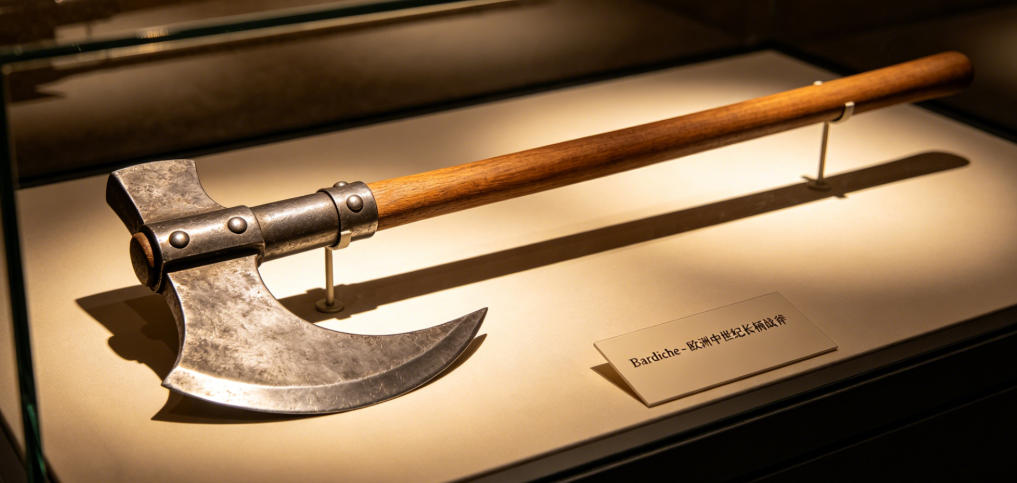
The Bardiche axe is one of the most distinctive medieval polearms in European military history. Recognized by its large curved axe blade attached to a long wooden shaft, the bardiche combined the cutting power of an axe with the reach advantage of a pole weapon.
Although many people associate medieval warriors with swords and shields, polearms played a crucial role on European battlefields. Weapons such as the bardiche, halberd, spear, and poleaxe allowed infantry soldiers to fight effectively against armored opponents and mounted cavalry.
But what is a bardiche, and how was this unusual weapon actually used?
Unlike ordinary battle axes, the bardiche featured an oversized blade that extended along a significant portion of the shaft. This design created a powerful chopping weapon capable of delivering devastating strikes while still providing greater distance between the warrior and enemy.
This guide explores the Bardiche axe history, origins, design, battlefield use, differences from other medieval polearms, and why the weapon remains popular among historical collectors today.
What Is a Bardiche?
A bardiche is a type of European polearm that combines a large axe blade with a long wooden handle.
The weapon is sometimes described as a poleaxe or battle axe polearm, although its design is different from many other medieval axes.
The main characteristics of a bardiche include:
- A large curved axe blade
- A long wooden shaft
- A blade attached directly to the pole
- A heavy cutting edge
- A design focused on powerful strikes
Unlike smaller hand axes, the bardiche gave infantry soldiers increased reach and leverage.
The weapon was especially associated with Eastern Europe, Russia, and regions influenced by Slavic military traditions.
The term bardiche axe is often used today by collectors and historians to describe this specific style of medieval weapon.

Bardiche Axe History and Origins
The exact origins of the bardiche are debated, but the weapon became prominent in Europe during the late medieval period.
Most historical examples date from approximately the 15th to 17th centuries, particularly in Eastern Europe.
The bardiche developed during a period when warfare was changing rapidly.
The increased use of:
- Plate armor
- Professional infantry
- Firearms
- Organized military units
created demand for weapons that could provide infantry soldiers with power and versatility.
Large-bladed polearms became effective tools because they could deliver powerful attacks while allowing soldiers to maintain distance from opponents.
The bardiche became particularly important in regions such as:
- Russia
- Poland
- Lithuania
- Eastern Europe
It was later used by military units including Russian infantry formations and guards.
Why Was the Bardiche Important in Medieval Warfare?
The effectiveness of the medieval bardiche came from its combination of reach, weight, and cutting ability.
A normal axe could deliver powerful blows but required the user to fight at close range.
The bardiche solved this problem by extending the blade onto a long shaft.
This provided several advantages:
Greater Reach
The longer handle allowed warriors to attack opponents before they could enter sword range.
Powerful Cutting Attacks
The large blade generated significant force during a swing.
Defensive Capability
The length of the weapon allowed infantrymen to control space and keep enemies away.
Effective Against Armor
While not specifically designed to pierce the strongest plate armor, powerful blows could damage armor, break shields, and injure opponents through impact force.
Bardiche Design: Blade and Construction
The unique appearance of the Bardiche axe comes from its unusual blade design.
Unlike a traditional axe where the blade is attached near the top of a short handle, the bardiche blade often extended downward along the shaft.
This created a strong connection between the blade and pole.
A typical bardiche included:
Large Curved Blade
The wide blade provided a large cutting surface.
Long Wooden Shaft
The shaft increased reach and allowed stronger swings.
Reinforced Attachment
The blade was secured to the pole using metal fittings, sockets, or long attachment methods depending on the period.
Heavy Construction
Compared with lighter polearms, the bardiche was a powerful but relatively heavy weapon.
Its design prioritized impact force rather than speed.
How Was a Bardiche Used?
Many people ask: How was a bardiche used in battle?
The bardiche was primarily an infantry weapon.
A soldier could use it for:
- Powerful downward strikes
- Side swings
- Defensive positioning
- Controlling enemy movement
- Fighting against cavalry
The weapon was especially effective when used by organized infantry formations.
A group of soldiers equipped with long polearms could create a dangerous defensive line, making it difficult for enemy cavalry or infantry to approach.
Although the bardiche looked similar to a giant axe, it was not simply a larger version of a hand axe. Its long shaft changed the way it functioned on the battlefield.
Bardiche vs Halberd: What Is the Difference?
The bardiche and halberd are often compared because both are famous European polearms.
However, their designs and battlefield roles were different.
Bardiche
- Large axe-style blade
- Usually a simpler design
- Focused on powerful cutting attacks
- Strong association with Eastern Europe and Russia
Halberd
- Axe blade combined with spike and hook
- More versatile design
- Could cut, thrust, and pull opponents
- Common in Western and Central Europe
The halberd was generally a more complex multi-purpose weapon, while the bardiche focused more on delivering powerful axe-like strikes.
Both weapons represent the importance of medieval polearms in European warfare.

Bardiche vs Poleaxe
The bardiche and poleaxe are also sometimes confused.
The poleaxe was primarily associated with medieval knights and armored combat.
It often featured:
- Axe blade
- Hammer face
- Spike
- Reinforced shaft
The poleaxe was designed specifically for fighting heavily armored opponents.
The bardiche, on the other hand, was more commonly an infantry weapon used by soldiers rather than knights.
Its large blade emphasized powerful chopping attacks rather than specialized anti-armor techniques.
Bardiche and Russian Military History
One of the strongest historical associations of the bardiche axe is with Russia.
During the 16th and 17th centuries, bardiches became common among Russian infantry units.
They were often carried by soldiers who also used early firearms.
In some cases, the bardiche served a practical purpose beyond close combat.
The long shaft could help support firearms such as early muskets, providing stability during shooting.
This made the bardiche a useful companion weapon during the transition period between medieval melee warfare and early modern firearms warfare.
Bardiche in Eastern European Warfare
Although strongly associated with Russia, the bardiche was also found in other parts of Eastern Europe.
Its popularity was influenced by:
- Regional military traditions
- Infantry organization
- Availability of metalworking skills
- Changes in battlefield tactics
Eastern European armies often relied heavily on infantry weapons because large numbers of soldiers needed affordable and effective equipment.
The bardiche provided a practical solution: a powerful weapon that could be produced and used by ordinary soldiers.
Was the Bardiche a Good Weapon?
The effectiveness of the bardiche polearm depended on the battlefield situation.
Its advantages included:
- High striking power
- Excellent reach
- Strong intimidation factor
- Effective infantry support weapon
However, it also had disadvantages:
- Heavy weight
- Less maneuverable than swords
- Difficult to use in crowded spaces
- Required training and strength
Like all historical weapons, the bardiche was designed for specific combat conditions.
It was not necessarily superior to swords, spears, or halberds, but it was highly effective when used in the right tactical environment.
Bardiche Materials and Craftsmanship
Historical bardiches were typically made using:
- Forged iron
- Steel cutting edges
- Hardwood shafts
- Metal reinforcement fittings
The blade required careful forging because it needed to withstand powerful impacts.
A well-made bardiche needed a balance between:
- Blade strength
- Edge durability
- Weight distribution
- Shaft stability
Modern bardiche replicas often use carbon steel blades combined with wooden shafts to recreate the appearance of historical examples.
Bardiche in Popular Culture
The bardiche axe has gained renewed popularity through:
- Fantasy games
- Historical documentaries
- Medieval reenactment
- Role-playing games
- Weapon collections
Because of its dramatic appearance, the bardiche is often portrayed as a powerful warrior weapon.
Fantasy versions sometimes exaggerate its size, creating enormous weapons far larger than historical examples.
However, the real bardiche was already an impressive weapon because of its practical combination of reach and cutting power.
Conclusion: The Legacy of the Bardiche Axe
The bardiche axe was one of the most distinctive medieval European polearms, combining the destructive power of an axe with the reach of a long weapon.
Although less famous than swords and halberds, the bardiche played an important role in Eastern European military history, especially in Russia and neighboring regions.
Its large curved blade, long shaft, and powerful cutting ability made it an effective infantry weapon during a period of major changes in warfare.
Today, the bardiche remains an important example of medieval weapon design and continues to attract collectors interested in European polearms, medieval axes, historical weapons, and bardiche replicas.
From battlefield weapon to historical collectible, the bardiche represents the creativity and practicality of medieval arms development.
