Falchion Sword Guide: Medieval Curved Weapon Design & Combat History
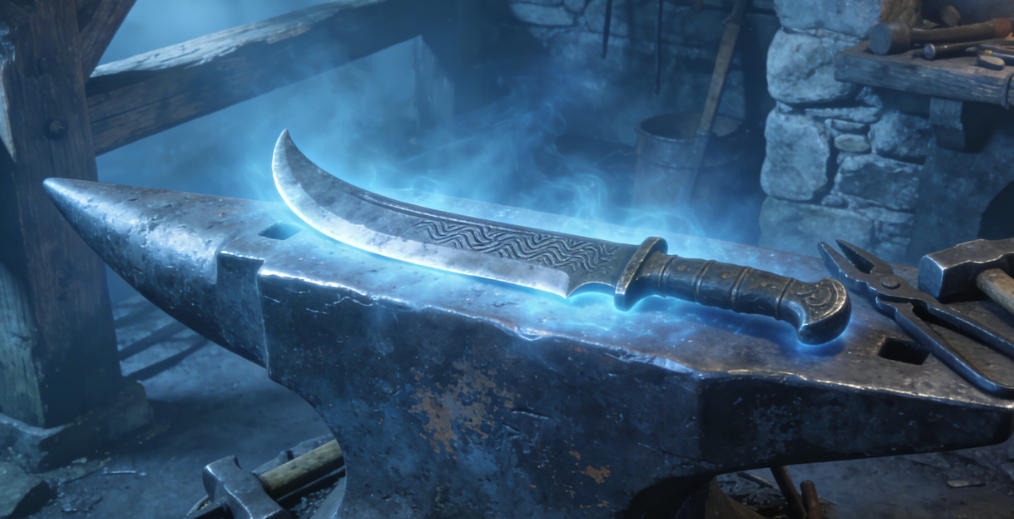
What Is a Falchion Sword and How Was It Used in Medieval Combat as a Curved Axe-Sword Hybrid Weapon?
What Is a Falchion Sword? The Medieval Axe-Sword Hybrid Weapon
The falchion sword, also widely searched as medieval falchion weapon, curved single-edged sword, and axe-sword hybrid medieval blade, is one of the most distinctive weapons of European warfare.
Unlike traditional longswords or rapiers, the falchion combines the cutting power of an axe with the versatility of a sword, making it a highly effective weapon for close combat and battlefield chaos.
In modern search trends, it is commonly associated with:
- falchion sword history and origin
- medieval curved sword design explained
- blacksmith forged falchion weapons
- axe vs sword medieval comparison
- best medieval chopping sword for combat
This unique design reflects the creativity of medieval blacksmiths who prioritized practical battlefield efficiency over elegance.
Origins of the Falchion: A Weapon Born from Practical Warfare
The falchion originated in medieval Europe between the 11th and 14th centuries, evolving as warfare demanded more brutal and efficient weapons.
Historical influences include:
- Agricultural cutting tools such as sickles and cleavers
- Early single-edged European blades
- Regional experimentation by medieval blacksmith guilds
Archaeological and historical records show that falchions were widely used by:
- Infantry soldiers
- Knights in close combat
- Mercenary forces
- City guards and militia units
Unlike noble ceremonial swords, the falchion was designed for real battlefield survival in messy melee combat.

Falchion Sword Design: Blade Structure and Blacksmith Engineering Genius
The falchion is a masterpiece of medieval forging, blending simplicity with devastating effectiveness.
Single-Edged Curved Blade Design
The blade is:
- Thick and durable
- Single-edged for maximum chopping force
- Slightly curved or cleaver-shaped
- Designed for high-impact strikes
This structure allows it to generate massive cutting power even with a single swing.
Forward-Weighted Balance System
One of the key design features is the forward-biased center of gravity, which means:
- More impact force at the blade tip
- Increased chopping efficiency
- Stronger momentum in swings
- Better penetration against light armor
This design effectively turns every strike into a high-energy impact attack.
Blacksmith Craftsmanship and Forging Intelligence
Medieval blacksmiths engineered the falchion with practical battlefield logic:
- Simplified blade construction for mass production
- Optimized weight distribution for fatigue reduction
- Reinforced spine for durability in heavy combat
- Variations adapted to regional warfare needs
This makes the falchion one of the clearest examples of blacksmith genius in medieval weapon design.
Types of Falchion Swords in Medieval Europe
Historical falchions existed in multiple forms:
Cleaver-Style Falchion
- Resembles a large machete or meat cleaver
- Designed for brute-force cutting
- Common in 13th–14th century infantry use
Curved Falchion Variant
- Slightly arched blade profile
- Improved slashing efficiency
- Better suited for mobile combat
Decorative Noble Falchion
- Engraved and ornamented versions
- Used by knights and high-ranking warriors
- Combined battlefield use with status symbolism
These variations highlight how flexible the falchion design was across Europe.

Medieval Combat Tactics: How the Falchion Was Used in Battle
The falchion was not a dueling weapon—it was a battlefield destruction tool.
1. Heavy Slashing Attacks
Its main tactic involved:
- Wide horizontal cuts
- Diagonal chopping strikes
- Fast momentum-based swings
These attacks were devastating in tight infantry formations.
2. Armor Exploitation Strategy
While not designed for heavy plate armor, falchions were effective against:
- Light armor
- Chainmail gaps
- Unshielded enemies
The blade’s weight allowed it to deliver crushing impact damage.
3. Close-Quarters Melee Dominance
In chaotic battlefield conditions, falchions excelled because they:
- Required minimal precision
- Delivered instant high damage
- Performed well in confined spaces
This made them ideal for infantry brawls and siege combat environments.
Falchion vs Other Medieval Weapons
The falchion is often compared with swords and axes:
- Compared to longswords: more raw power, less finesse
- Compared to axes: faster and more versatile
- Compared to sabers: heavier impact, less mounted combat focus
This hybrid identity is why it is often described as an axe-sword medieval weapon hybrid.
Cultural Meaning and Symbolism of the Falchion
Beyond combat use, the falchion carried symbolic meaning in medieval society:
- Strength and brutality of warfare
- Practical skill of blacksmith craftsmanship
- Status symbol for warriors and knights
- Representation of survival-focused combat doctrine
In some regions, it was also used in heraldic imagery to represent military power and authority.
Falchion in Modern Gaming and Pop Culture
Today, the falchion remains popular in:
- Fantasy RPG weapon systems
- Medieval-themed video games
- Historical reenactment events
- Sword collecting and blacksmith replicas
In gaming, it is often portrayed as:
- High-damage chopping weapon
- Slow but powerful melee blade
- Anti-armor brute-force sword
This modern interpretation reflects its historical battlefield identity.
Conclusion: Why the Falchion Remains a Blacksmith Masterpiece
The falchion sword is one of the most efficient examples of medieval weapon engineering. It embodies the balance between simplicity, brutality, and battlefield effectiveness.
As one of the most searched historical weapons—medieval falchion sword history, curved blade weapon design, axe-sword hybrid medieval weapon—it continues to fascinate historians, gamers, collectors, and martial arts enthusiasts.
Ultimately, the falchion stands as proof that medieval blacksmiths were not just craftsmen, but innovators of practical warfare technology.
