Sword Hilts Explained:History, Structure, Craftsmanship, & Modern Uses
What Is a Sword Hilt and How Has It Evolved Over Time?
The sword hilt is much more than a handle—it is the heart of a sword, combining balance, protection, and artistry. Understanding the structure of sword hilts, their historical development, forging techniques, and craftsmanship offers insight into why these components were critical to medieval warriors and why they continue to fascinate collectors and martial artists today.
What is a Sword Hilt?
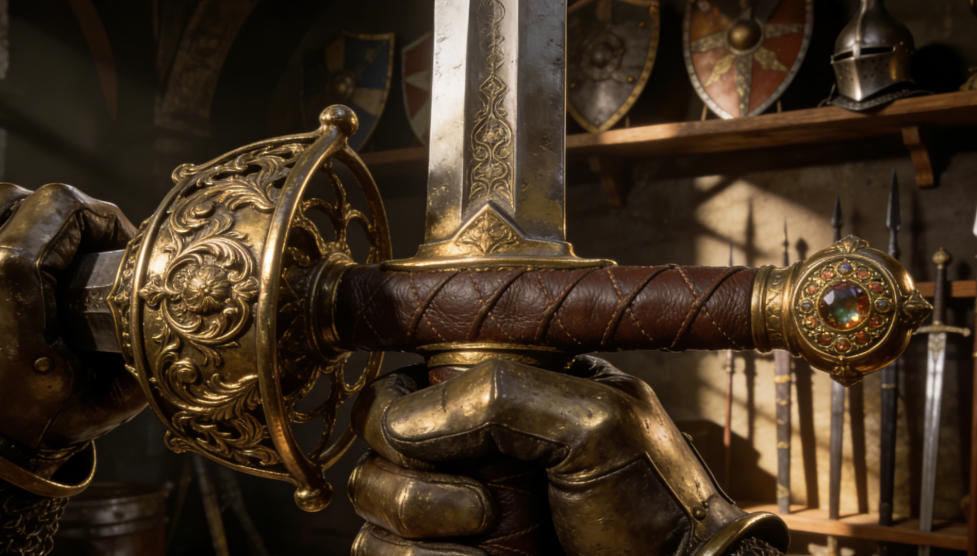
A sword hilt includes all parts of the handle that the wielder holds or interacts with: the grip, guard, and pommel. While the blade is the offensive part of a sword, the hilt determines how effectively it can be wielded. A strong, well-crafted hilt ensures better control, enhances speed and precision, and protects the hand in medieval combat scenarios.
The design of a hilt also affects the overall balance of the sword, influencing how it feels in a one-handed or two-handed grip. As warfare evolved, sword hilts transitioned from simple functional designs to complex structures that combined combat efficiency with elaborate decoration.

Components of a Sword Hilt
A sword hilt is composed of three main parts, each serving both functional and aesthetic purposes:
- Grip: The handle that the wielder holds. Grips were commonly made from wood, wrapped in leather, wire, or cord to improve comfort and prevent slipping. Longer grips allowed for two-handed techniques in hand-and-a-half swords, while shorter grips were used in one-handed arming swords.
- Guard (Crossguard or Quillon): Positioned between the blade and grip, the guard protects the hand from sliding onto the blade and deflects enemy strikes. Guards ranged from simple straight bars to intricate swept designs, adding both protection and flair to the weapon.
- Pommel: The counterweight at the end of the hilt, balancing the blade and enhancing maneuverability. Pommels were sometimes weighted, shaped, and decorated to serve as striking tools, and they often reflected the wealth or rank of the sword’s owner.
Some advanced hilts incorporated rings, knuckle guards, and side bars for additional protection, especially in Renaissance-era swords.
Historical Evolution of Sword Hilts
Sword hilts evolved alongside changes in warfare, armor, and combat techniques:
- Early swords (8th–12th centuries): Simple hilts with minimal guards, primarily designed for slashing unarmored opponents.
- High medieval period (13th–15th centuries): Introduction of crossguards and longer grips to improve control against armored enemies.
- Renaissance swords (15th–17th centuries): Hilts became more elaborate, featuring swept designs, intricate pommels, and knuckle protection to accommodate dueling and ceremonial purposes.
Regional variations also played a role. German longswords often had long grips for half-swording, allowing thrusts through armor, while Spanish and Italian swords used ornate swept hilts optimized for dueling. Each variation reflected the cultural, tactical, and artistic influences of the era.
Materials and Forging Techniques
Creating a durable and balanced sword hilt required skillful craftsmanship. Blacksmiths and armorers used materials such as iron, steel, bronze, and wood, often reinforced with leather, wire, or precious metals. Advanced techniques included:
- Forging: Heating and shaping metal components for strength and precision.
- Casting: Pouring molten metal into molds for decorative pommels and guards.
- Riveting and welding: Securing the grip, guard, and pommel to the tang of the sword.
Properly forged hilts were balanced with the blade to improve handling, thrusting accuracy, and slashing efficiency. Modern swordmakers replicate these techniques to create historically accurate swords for collectors, HEMA training, and stage combat.

Types of Sword Hilts
Over the centuries, sword hilts evolved into several distinct types:
- Crossguard hilts: Simple bars providing basic hand protection, common in arming swords.
- Swept hilts: Complex designs with loops and knuckle guards for dueling swords.
- Basket hilts: Fully enclosed guards protecting the entire hand, typical in broadswords and Scottish claymores.
- Disc or wheel pommels: Circular counterweights improving balance and aesthetic appeal.
Choosing a hilt type depends on sword purpose, combat style, and historical accuracy. For example, basket-hilted swords excelled in battlefield engagements, while swept hilts were preferred for civilian dueling.
Cultural and Symbolic Significance
Beyond functionality, sword hilts symbolized status, rank, and identity. Knights, nobility, and elite warriors often possessed swords with intricately decorated hilts, reflecting their wealth and prestige. Certain pommel shapes, engravings, and guard styles were associated with specific regions, clans, or military orders.
In literature and modern media, swords with unique hilts often symbolize heroism, honor, and martial skill, demonstrating the enduring cultural impact of these components.
Modern Use and Collecting
Today, sword hilts remain a major focus for enthusiasts, reenactors, and martial artists. Authentic historical replicas are highly sought after for medieval weapon collections and display, while functional hilts are essential for HEMA practitioners to practice grips, thrusts, and parries accurately.
Collectors often study hilt construction, historical provenance, and regional variations to authenticate antique swords or commission replicas. Meanwhile, the artistry of sword hilts continues to inspire modern swordsmiths and designers in both practical and ceremonial contexts.
Maintenance and Preservation of Sword Hilts
Proper care of a sword hilt is essential to preserve both its functionality and historical value. Materials like wood, leather, and metal are prone to wear, corrosion, and damage if neglected. Collectors and practitioners use techniques such as:
- Cleaning and oiling metal components to prevent rust and maintain the strength of the guard and pommel.
- Leather conditioning to keep grips supple and prevent cracking.
- Proper storage in climate-controlled environments to avoid moisture or extreme temperature fluctuations.
For historical swords, professional conservation may be necessary to preserve intricate designs and original materials. Even modern replicas benefit from regular maintenance to ensure the hilt remains balanced, safe, and comfortable for HEMA training, reenactments, and martial arts practice.
Hilt Innovations and Modern Adaptations
Over centuries, sword hilts have inspired innovative designs for both historical accuracy and modern utility. Contemporary sword makers experiment with ergonomic grips, lightweight alloys, and modular components that combine the authentic feel of medieval hilts with modern durability.
In addition, hilts have influenced modern stage combat and movie props, where durability, safety, and visual appeal are paramount. Designers also draw inspiration from historical hilts for cosplay, fantasy replicas, and ceremonial swords, ensuring that the artistry and technical ingenuity of sword hilts continue to influence both martial practice and popular culture.
