Uesugi Kenshin: Dragon of Echigo, Samurai Warlord & Shingen Rival
Who Was Uesugi Kenshin and Why Was He Called the Dragon of Echigo?
During Japan’s Sengoku period, when powerful daimyo competed for territory and influence, few warriors became as legendary as Uesugi Kenshin. Known as the 'Dragon of Echigo,' Kenshin was one of the most formidable samurai warlords of 16th-century Japan and is especially famous for his long rivalry with Takeda Shingen, the 'Tiger of Kai.'
Born as Nagao Kagetora in 1530, Kenshin rose from the Nagao clan of Echigo Province and eventually became the head of the Uesugi clan. His career combined military campaigns, political struggles, religious devotion, and a strong reputation for discipline and battlefield leadership.
The story of Uesugi Kenshin is also surrounded by legend. His devotion to Bishamonten, his reputation as a “war god,” and his dramatic encounters with Takeda Shingen helped transform him from a historical daimyo into one of the most recognizable figures in Japanese samurai history.
This guide explores Uesugi Kenshin’s biography, early life, military career, the Dragon of Echigo legend, his rivalry with Takeda Shingen, the Battles of Kawanakajima, his religious beliefs, and his lasting legacy in Japanese culture.
Who Was Uesugi Kenshin?
Uesugi Kenshin was a powerful Japanese daimyo who ruled Echigo Province during the Sengoku period. He was born in 1530 as Nagao Kagetora, the fourth son of Nagao Tamekage.
Unlike many Sengoku warlords who are remembered primarily for territorial expansion, Kenshin developed a reputation for restoring order within Echigo and defending territories against rival clans.
His rise to power was not simple. The Nagao clan was divided by internal political struggles, and Kenshin had to establish his authority before becoming the dominant power in Echigo.
His military ability quickly became apparent. He successfully dealt with rebellions and rival local warlords, gradually consolidating his position.
Later, Kenshin was adopted into the Uesugi clan by Uesugi Norimasa and inherited the prestigious Uesugi name. This greatly strengthened his political legitimacy and connected him with the position of Kantō Kanrei, an important office associated with the Muromachi shogunate.

Uesugi Kenshin’s Early Life and Rise to Power
Kenshin was born in Echigo Province, an area corresponding roughly to modern-day Niigata Prefecture.
His early years were shaped by political instability and military conflict. As a young member of the Nagao family, he gained experience managing castles and dealing with local opposition.
By his late teens, Kenshin was already becoming an important military figure.
His ability to mobilize troops and suppress internal rebellions helped establish his reputation. Rather than immediately pursuing distant conquests, he first focused on strengthening his authority within Echigo.
This foundation became extremely important later because Echigo provided Kenshin with a secure base for campaigns against the Takeda, Hōjō, and other rival powers.
His leadership style combined strict military discipline with an emphasis on regional stability, helping him become one of the most influential Sengoku daimyo of his generation.
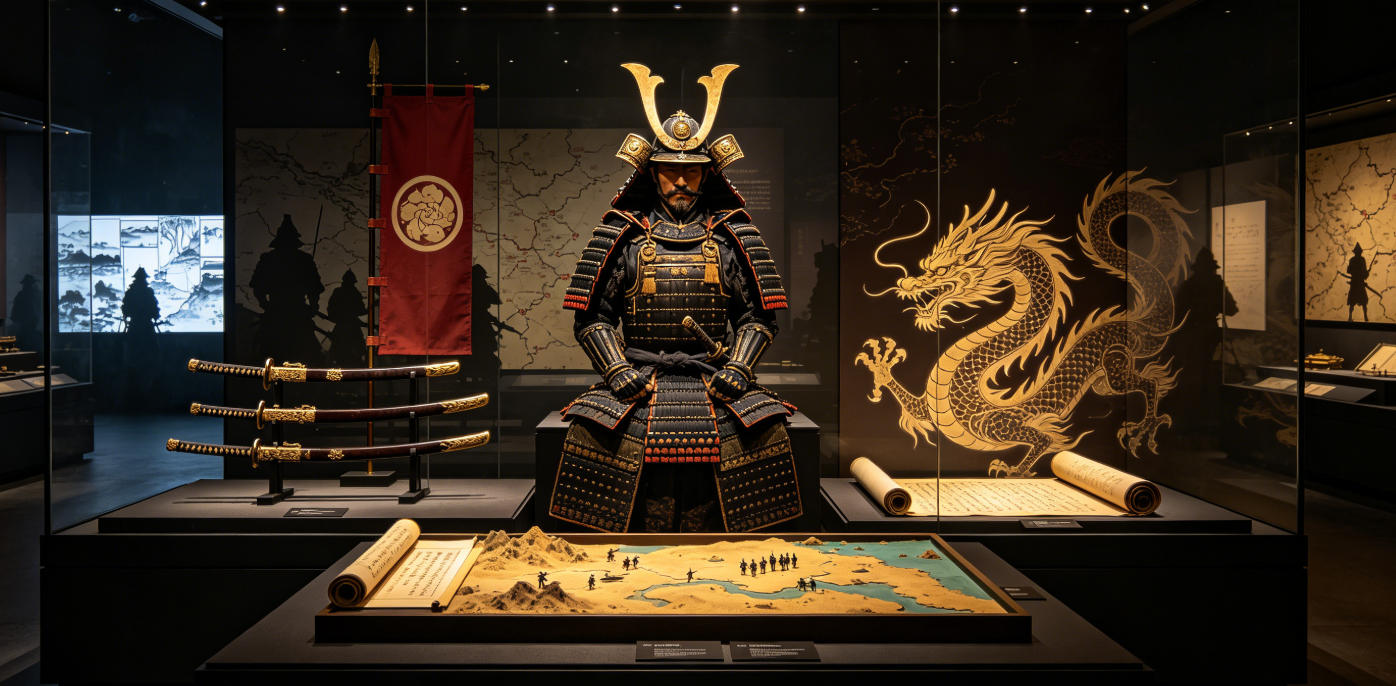
Why Was Uesugi Kenshin Called the 'Dragon of Echigo'?
The title 'Dragon of Echigo' is one of the most famous parts of Kenshin’s identity.
In Japanese historical tradition and later popular culture, the dragon became associated with his military power, speed, and almost supernatural battlefield reputation.
His rival Takeda Shingen was known as the 'Tiger of Kai,' creating the famous symbolic contrast of Dragon vs Tiger.
Kenshin’s reputation came from more than individual victories. He was known as a highly capable commander who could rapidly move his forces across difficult terrain and respond to threats in different regions.
His campaigns extended beyond Echigo into Shinano and the Kantō region, where he repeatedly confronted powerful rivals.
The image of the Dragon of Echigo therefore represents both his military reputation and the legendary status he acquired after his death.
Uesugi Kenshin and Takeda Shingen: The Legendary Rivalry
The rivalry between Uesugi Kenshin and Takeda Shingen is arguably the most famous military rivalry of the Sengoku period.
Shingen controlled Kai and expanded into Shinano, while Kenshin ruled Echigo. Their territories eventually came into conflict in northern Shinano.
Both men were highly experienced commanders, but their strategic priorities differed.
Takeda Shingen became famous for his military organization, territorial expansion, cavalry forces, and strategic campaigns.
Uesugi Kenshin developed a reputation for rapid maneuvering, aggressive battlefield attacks, and military intervention on behalf of allies and territories connected to the Uesugi.
Their rivalry eventually centered on the strategically important plain of Kawanakajima.
The two warlords confronted one another there five times between 1553 and 1564. None of the five battles produced a decisive transfer of territory, but the fourth battle in 1561 became particularly famous for its intensity.
The Battle of Kawanakajima
The Battles of Kawanakajima are among the most famous conflicts in Japanese military history.
The five major engagements took place in:
-
1553
-
1555
-
1557
-
1561
-
1564
The campaigns were driven largely by the struggle between the Takeda and Uesugi powers over northern Shinano.
For Kenshin, controlling the region was important for protecting Echigo and supporting allies threatened by Takeda expansion.
For Shingen, Shinano was essential to the expansion of Takeda power.
The repeated clashes eventually became the defining military story of both warlords. Although later popular culture often portrays them as two commanders locked in a perfectly balanced personal duel, the actual campaigns were complex operations involving numerous generals, fortifications, supply lines, alliances, and regional politics.
The Fourth Battle of Kawanakajima in 1561
The Fourth Battle of Kawanakajima, fought in 1561, is the most famous encounter between Kenshin and Shingen.
It is remembered for the intensity of the fighting and the large number of casualties suffered by both sides.
The battle has also produced one of the most famous legends in samurai history.
According to the traditional story, Kenshin personally rode into the Takeda command position during the fighting and attacked Takeda Shingen with his sword. Shingen supposedly defended himself with an iron war fan.
This dramatic Uesugi Kenshin vs Takeda Shingen duel has become an iconic image of Japanese warrior culture.
However, historians caution that the famous one-on-one encounter comes from later accounts and cannot be treated as a securely documented event.
The story nevertheless became an essential part of the legend surrounding the Dragon of Echigo.
Uesugi Kenshin’s Military Strategy
One reason Uesugi Kenshin became so famous was his ability to conduct rapid and aggressive military campaigns.
His military reputation was based on several important characteristics.
Rapid Maneuver
Kenshin was capable of moving troops quickly across difficult terrain and responding rapidly to changing threats.
This was particularly valuable in mountainous regions where mobility could determine the success of a campaign.
Battlefield Leadership
Kenshin was famous for personally inspiring his troops.
Unlike the modern image of a commander who always remained far from combat, Sengoku daimyo sometimes placed themselves in positions where their soldiers could see and follow them.
Later accounts emphasize Kenshin’s personal courage and willingness to lead from the front.
Regional Defense
Kenshin repeatedly campaigned outside Echigo, particularly against the Hōjō and Takeda powers.
His military career was therefore not simply about conquering new territory. It also involved protecting allies, restoring political influence, and defending strategic positions.
Uesugi Kenshin and the Hōjō Clan
The Takeda were not Kenshin’s only major enemy.
He also repeatedly confronted the powerful Hōjō clan, which controlled much of the Kantō region.
Kenshin became involved in Kantō affairs after supporting Uesugi Norimasa and attempting to recover Uesugi influence from the Hōjō.
His campaigns against the Hōjō included an important expedition to Odawara Castle in 1561.
Although Kenshin assembled a large army and reached Odawara, he was unable to force the castle to surrender.
The campaign demonstrates that even a commander as powerful as Kenshin faced serious limitations when attempting to defeat heavily fortified opponents.
Why Was Uesugi Kenshin Called a War God?
Kenshin's reputation was strongly connected with his religious beliefs.
He was a devoted follower of Bishamonten, a Buddhist deity associated with protection, warfare, and justice.
Kenshin reportedly believed that Bishamonten protected him and his armies.
This religious identity contributed to his image as a war god.
Some of his followers regarded him as an earthly manifestation or favored servant of Bishamonten, further strengthening the supernatural reputation surrounding him.
His faith also became an important part of his political and military identity.
Rather than presenting himself solely as a territorial conqueror, Kenshin could portray his campaigns as connected with justice, order, and the protection of legitimate authority.

Uesugi Kenshin and Samurai Ethics
The image of Uesugi Kenshin is closely associated with honor, discipline, and loyalty.
He became famous in later traditions as a warlord who followed a stricter moral code than some of his contemporaries.
However, it is important to recognize that the concept of bushido itself developed over a long period and should not simply be projected backward as a fully defined code during the Sengoku period.
Kenshin nevertheless developed a strong reputation for personal discipline and loyalty.
This reputation helped distinguish him from the stereotype of the ruthless Sengoku warlord who would use any means necessary to expand territory.
His historical personality was undoubtedly more complicated, but the combination of military ability and moral reputation became central to his legend.
The Salt Legend: Kenshin and Shingen
One of the most famous stories about the relationship between Kenshin and Shingen concerns salt.
According to the traditional account, when the Hōjō and Imagawa restricted salt supplies to Takeda territory, Kenshin supposedly refused to take advantage of the situation.
The famous phrase associated with the story is often summarized as the idea that Kenshin would fight Shingen with the sword rather than with salt.
The story has become an important part of the popular image of their rivalry, suggesting that Kenshin respected the principles of honorable warfare.
However, like many famous stories from the Sengoku period, the precise historical details are difficult to verify.
The legend nevertheless reinforces the enduring image of Takeda Shingen and Uesugi Kenshin as honorable rivals.
Uesugi Kenshin’s Death and Succession Crisis
Kenshin remained politically and militarily active until the final years of his life.
In 1577, he achieved a significant victory against the forces of Oda Nobunaga at the Battle of Tedorigawa, demonstrating that the Uesugi remained a major regional power.
But Kenshin's sudden death in 1578 created a serious succession problem.
He had not left a clearly established successor, and two adopted heirs, Uesugi Kagekatsu and Uesugi Kagetora, became rivals.
Their struggle led to the Otate Disturbance, a civil conflict within the Uesugi clan.
The succession crisis weakened the Uesugi at a crucial moment and prevented Kenshin's political achievements from being easily continued by a single successor.
Uesugi Kenshin’s Legacy
The legacy of Uesugi Kenshin extends far beyond his lifetime.
He is remembered as:
-
The Dragon of Echigo
-
A powerful Sengoku daimyo
-
A legendary military commander
-
A devotee of Bishamonten
-
The rival of Takeda Shingen
-
One of Japan's most famous samurai warlords
His story became increasingly legendary over the centuries.
The rivalry with Shingen, the dramatic Kawanakajima battles, the Bishamonten connection, and stories of his personal courage all contributed to an image that goes beyond the historical record.
Modern historians therefore distinguish between Uesugi Kenshin history and the later legends created around him.
Uesugi Kenshin in Modern Popular Culture
Today, Kenshin remains a major figure in Japanese popular culture.
He appears in:
-
Historical novels
-
Samurai films
-
Anime
-
Manga
-
Video games
-
Strategy games
-
Japanese historical dramas
-
Samurai documentaries
He is particularly prominent in games and stories focusing on the Sengoku period, where players often encounter both Kenshin and Takeda Shingen as rival military powers.
The visual contrast between the Dragon of Echigo and the Tiger of Kai has become one of the most recognizable themes in representations of Sengoku Japan.
Uesugi Kenshin vs Takeda Shingen: Who Was the Better Samurai Warlord?
This question continues to attract fans of Japanese history.
There is no simple answer.
Takeda Shingen was an exceptional territorial strategist who expanded Takeda power across Kai and Shinano and built a sophisticated military and political system.
Uesugi Kenshin was equally formidable, particularly in rapid campaigns, regional intervention, and battlefield maneuvering.
Their repeated clashes at Kawanakajima did not produce a definitive winner. Instead, the rivalry became famous precisely because two highly capable commanders repeatedly prevented the other from achieving complete dominance.
Rather than asking who was 'better,' it is more useful to understand how their different strategies shaped the Sengoku period.
Conclusion: Why Is Uesugi Kenshin Still Famous?
Uesugi Kenshin remains one of the most fascinating figures in Japanese samurai history because his life combines military skill, political ambition, religious devotion, and legendary rivalry.
Known as the Dragon of Echigo, he became famous for his campaigns in Shinano and the Kantō region and for his repeated confrontations with Takeda Shingen, the Tiger of Kai.
The Battles of Kawanakajima became the centerpiece of their rivalry, especially the dramatic fourth battle in 1561. While some famous stories surrounding the two warriors are probably later legends, they have played an enormous role in shaping the modern image of Sengoku samurai culture.
Kenshin's devotion to Bishamonten, his reputation for discipline, and his extraordinary battlefield career further transformed him into a near-mythical figure.
Whether studied as a historical daimyo or remembered as the legendary Dragon of Echigo, Uesugi Kenshin continues to represent the complexity, ambition, and warrior culture of Japan's Sengoku period.
