What Is a Tachi Sword? History, Samurai Origins & Tachi vs Katana
What Is a Tachi Sword and How Is It Different From a Katana?
What Is a Tachi Sword?
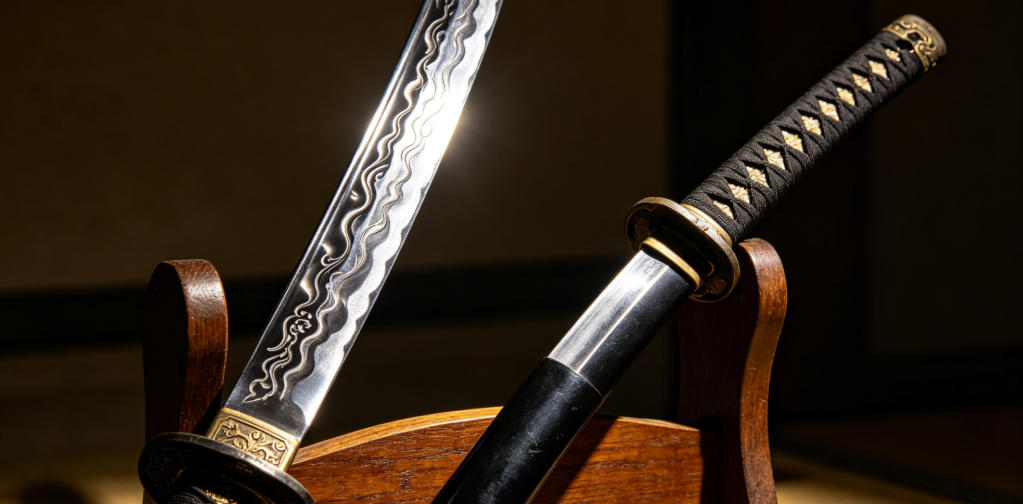
When people search for what is a Tachi sword, they are often interested in one of the oldest and most important Japanese swords in history. The Tachi (太刀) is a traditional Japanese curved sword that existed before the famous katana and played a major role during the early samurai period.
A Tachi sword was primarily designed for mounted warriors. Unlike the later katana, which was worn with the cutting edge facing upward through the obi belt, the tachi was worn suspended from the waist with the cutting edge facing downward.
The tachi is recognized by its:
- Long curved blade
- Deep curvature
- Elegant craftsmanship
- Traditional samurai fittings
- Battlefield-oriented design
The Japanese tachi sword represents an important stage in the evolution of Japanese sword-making. It reflects the needs of early samurai warriors, especially mounted combat where speed, reach, and powerful cutting ability were essential.
Today, the tachi remains highly valued among sword collectors, historians, martial artists, and enthusiasts searching for an authentic samurai sword replica or traditional Japanese blade.
The History of the Tachi Sword
The history of the Tachi sword dates back to Japan’s Heian period (794–1185), when mounted samurai warriors became increasingly important in warfare.
During this period, battles were often fought on horseback. Samurai needed weapons that could deliver powerful cutting attacks while riding at high speed. The curved design of the tachi was developed to improve the effectiveness of mounted sword combat.
Unlike earlier straight swords imported from China and Korea, Japanese swordsmiths gradually developed curved blades that better suited Japanese fighting techniques.
The tachi became famous for:
- Excellent cutting ability
- High-quality steel craftsmanship
- Beautiful blade curvature
- Advanced forging techniques
Many legendary Japanese swordsmiths created exceptional tachi blades, including works from famous schools such as:
- Bizen School
- Yamato School
- Soshu School
- Yamashiro School
These historical tachi swords are now considered valuable cultural treasures in Japan.

How Was a Tachi Sword Worn?
One of the biggest differences between Tachi and Katana is how they were carried.
The tachi was traditionally worn with the blade hanging downward from the waist.
This method was called taido-style mounting, and it was especially practical for horseback combat.
A mounted samurai could draw the sword smoothly while riding because the blade position allowed greater freedom of movement.
The tachi was usually carried using:
- Decorative sword fittings
- Hanging cords
- Special scabbards
- Elaborate mounts
Because the tachi was often used by high-ranking samurai and military leaders, many examples featured highly artistic decorations.
The sword was not only a battlefield weapon but also a symbol of:
- Status
- Family heritage
- Warrior identity
- Samurai honor
Tachi vs Katana: What Is the Difference?
The comparison Tachi vs Katana is one of the most common questions among Japanese sword enthusiasts.
Although they look similar, these two swords were created for different historical periods and combat styles.
| Feature | Tachi | Katana |
|---|---|---|
| Period | Before and early samurai era | Later samurai period |
| Wearing style | Edge facing downward | Edge facing upward |
| Main use | Mounted combat | Foot combat |
| Blade curvature | Usually deeper curve | Generally straighter curve |
| Fighting style | Horseback swordsmanship | Samurai ground combat |
The biggest difference is not simply the blade shape—it is the historical purpose behind the sword.
The tachi was designed for mounted warriors.
The katana was optimized for samurai fighting on foot.
Tachi vs Katana: Which Sword Is Better?
Many people ask:
Tachi vs Katana, which is better?
The answer depends on the situation.
The tachi had advantages in horseback combat because its longer curve allowed powerful downward cuts while riding.
The katana became more effective for infantry combat because it was easier to draw quickly and use in close-range fighting.
Tachi Advantages:
- Excellent mounted combat weapon
- Powerful cutting ability
- Strong historical importance
- Beautiful traditional design
Katana Advantages:
- Faster drawing technique
- Better for close combat
- More practical for foot soldiers
- Strong cultural association with samurai
Neither sword is universally better. Each represents a different stage of Japanese military development.
Why Are Japanese Swords Curved?
A common question about the Tachi sword is:
Why are Japanese swords curved?
The curve developed because it improved cutting performance.
A curved blade allows:
- More effective slicing motion
- Better cutting efficiency
- Stronger blade structure
- Easier drawing from the scabbard
Early Japanese swordsmiths discovered that combining:
- High-carbon steel
- Differential heat treatment
- Curved blade design
created swords with excellent sharpness and durability.
This forging tradition later influenced the development of the katana and other Japanese swords.

Tachi Sword Replica and Modern Collecting
Today, the Tachi sword replica has become increasingly popular among collectors, martial artists, Japanese history enthusiasts, and fans of traditional samurai weapons. Compared with the more common katana, the tachi represents an earlier stage of Japanese sword development and showcases the unique style of the mounted samurai era.
Many collectors choose a handmade tachi sword because it offers a deeper connection to ancient Japanese culture, traditional sword craftsmanship, and the history of samurai warfare. Whether used as a display piece, historical collection item, or martial arts training sword, a well-crafted tachi replica captures the elegance and power of this legendary Japanese blade.
When choosing a high-quality tachi sword replica, collectors usually consider several important factors:
Blade Material
The blade material directly affects the sword’s appearance, durability, and overall quality. Popular options include:
- 1095 high carbon steel – Known for excellent hardness and sharpness, often selected for functional sword replicas.
- T10 steel – A premium choice valued for strength, durability, and traditional katana-style performance.
- 1060 carbon steel – Offers a good balance between toughness and flexibility.
- Damascus steel – Popular among collectors for its unique layered patterns and artistic appearance.
Construction Quality
A quality Japanese tachi sword replica should feature careful craftsmanship and reliable construction. Important details include:
- Full tang construction for improved strength and authenticity
- Proper heat treatment to enhance blade performance
- Balanced weight for a realistic handling experience
- Accurate historical proportions and design
- High-quality fittings that match traditional Japanese sword styles
Authentic Appearance
A well-made tachi replica focuses not only on the blade but also on the details that represent traditional Japanese sword culture. Common features include:
- Traditional scabbard (saya)
- Samurai-style sword fittings
- Elegant curved blade profile
- Detailed tsuba and handle design
- Authentic-style wrapping and decoration
For collectors, a tachi is more than just a sword—it is a representation of ancient Japanese craftsmanship, samurai history, and the evolution of Japanese weapons. Owning a tachi replica allows enthusiasts to experience the beauty and cultural significance of one of Japan’s most iconic historical swords.
Conclusion: Why Is the Tachi Sword Important in Japanese History?
The Tachi sword represents one of the most important stages in Japanese sword development. Before the katana became the iconic symbol of the samurai, the tachi served as the primary sword of early Japanese warriors.
Its curved blade, elegant craftsmanship, and connection with mounted samurai make it one of the most fascinating Japanese swords ever created.
Whether you are searching for what is a Tachi sword, comparing Tachi vs Katana, exploring Japanese sword history, or looking for a Tachi sword replica, understanding this legendary blade reveals the evolution of samurai weapons and Japanese craftsmanship.
The tachi is not simply an older version of the katana—it is a unique sword with its own history, purpose, and cultural significance.
