Sword Pommel Types Explained: Balance, Grip & Combat Performance
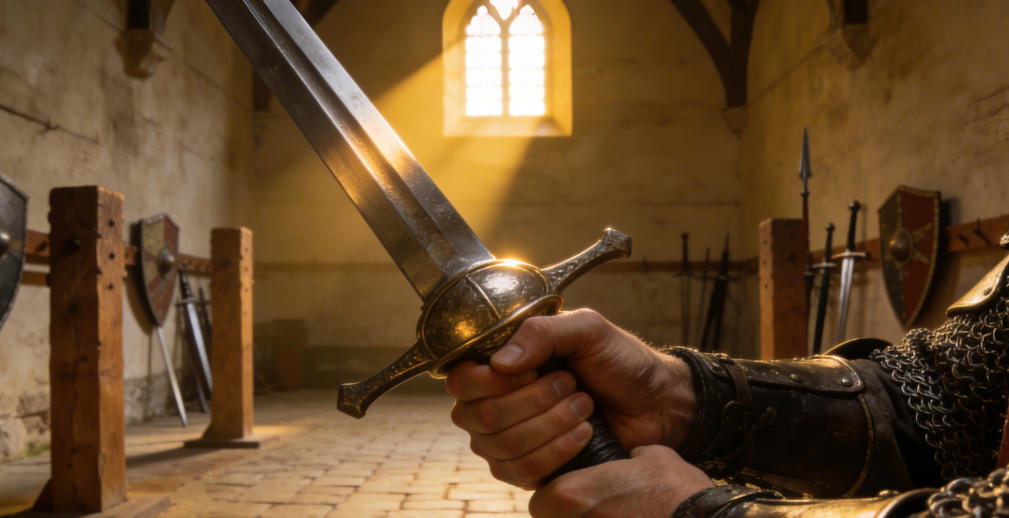
How Do Different Sword Pommels Affect Balance, Grip, and Combat?
The sword pommel is one of the most misunderstood parts of a weapon. Many people assume the pommel is purely decorative, but in reality, it directly affects a sword’s balance, handling speed, grip security, and combat efficiency. Whether studying a medieval longsword, knight sword, arming sword, or modern HEMA training weapon, understanding different pommel types is essential for mastering sword performance.
For collectors, martial artists, and historical weapons enthusiasts, the pommel of a sword is far more than a metal cap at the end of the hilt. It acts as a counterweight, stabilizer, structural reinforcement point, and sometimes even a secondary striking tool in close combat.
What Is a Sword Pommel?
A pommel is the weighted fitting attached to the end of a sword handle. It is connected directly to the tang and works together with the guard and grip to create the complete hilt structure.
The primary purpose of a pommel is to control the weapon’s center of gravity. Without proper rear weighting, a sword can feel excessively blade-heavy, reducing maneuverability and increasing wrist fatigue during extended combat or training sessions.
Historically, pommels also served several additional purposes:
- Reinforcing tang construction
- Improving grip retention
- Enhancing cutting control
- Supporting fast directional changes
- Providing a close-range striking surface
This is why the pommel became a crucial component in both European swordsmanship and later historical martial arts systems.

Why Pommel Balance Matters in Sword Combat
The relationship between pommel weight and sword balance is one of the most important principles in weapon design.
A sword’s balance point determines:
- Swing speed
- Recovery time after attacks
- Precision during thrusts
- Fatigue during prolonged fighting
- Edge alignment control
When the pommel adds sufficient rear weight, the sword becomes more agile and easier to redirect during combinations.
For longswords and arming swords, proper pommel balance allows smoother transitions between guards, faster counterattacks, and more efficient defensive movements. HEMA practitioners frequently discuss how subtle pommel changes dramatically affect sword handling characteristics.
Some swords prioritize forward-heavy cutting power, while others favor agility and responsiveness. The pommel is what fine-tunes that balance.
Common Sword Pommel Types and Their Functions
Throughout the Middle Ages and Renaissance, swordsmiths developed many different pommel designs. Each type influenced handling, ergonomics, and combat style differently.
Ball Pommel
The ball pommel is one of the most recognizable medieval sword pommel designs.
Characteristics
- Rounded spherical shape
- Even weight distribution
- Comfortable palm contact
Advantages
- Excellent overall balance
- Stable cutting mechanics
- Reduced vibration during impact
- Comfortable during long training sessions
Ball pommels became extremely common on knight swords and arming swords because they offered reliable balance without sacrificing maneuverability.
Collectors also appreciate the ball pommel for its historical authenticity and classic medieval appearance.
Disc Pommel
The disc pommel is especially associated with German longswords and later European war swords.
Characteristics
- Flat circular profile
- Concentrated rear weighting
- Compact structure
Advantages
- Improves maneuverability
- Supports rapid directional changes
- Reduces wrist fatigue
- Enhances defensive recovery speed
HEMA practitioners often prefer disc pommels because they help create faster transitions between guards and counters. Discussions among sword enthusiasts frequently highlight how disc pommels improve grip security while maintaining fluid movement.
For fast-paced swordsmanship systems, the disc pommel remains one of the most efficient historical designs.
Faceted Pommel
Faceted pommels feature geometric surfaces such as diamond or polygonal shapes.
Characteristics
- Multi-sided construction
- Decorative appearance
- Increased surface friction
Advantages
- Better grip control
- Reduced slipping with sweaty hands
- Strong visual aesthetics
- Improved close-range handling
These pommels became popular on ceremonial weapons, noble swords, and later Renaissance blades because they combined beauty with practical handling improvements.
The extra texture also provided additional grip stability during combat.
Wheel Pommel
The wheel pommel is another famous medieval sword component often seen on crusader swords and knightly weapons.
Characteristics
- Wide circular shape
- Thin profile
- Balanced weight spread
Advantages
- Excellent control during thrusting
- Reliable edge alignment
- Smooth wrist rotation
- Historically accurate for many medieval replicas
The wheel pommel became especially important in one-handed sword combat systems where agility and fast defensive reactions mattered.
Scent Stopper Pommel
Named for its resemblance to perfume bottle stoppers, the scent stopper pommel became common during the late medieval and Renaissance periods.
Characteristics
- Tall hexagonal profile
- Heavier upper structure
- Distinctive angular design
Advantages
- Strong counterweight effect
- Improved leverage
- Better two-handed control
- Aggressive visual appearance
This pommel style appeared frequently on longswords designed for armored combat and powerful cutting techniques.

Pear Pommel
The pear pommel combines ergonomic comfort with elegant shaping.
Characteristics
- Tapered rounded structure
- Narrow upper section
- Wider lower grip stop
Advantages
- Natural hand support
- Secure retention during swings
- Comfortable grip transitions
- Balanced weight distribution
This type is commonly seen on later medieval swords focused on precision handling.
How Pommel Design Affects Grip and Handling
A pommel does more than shift weight—it directly changes how the sword interacts with the hand.
A properly designed pommel:
- Prevents hand slippage
- Improves edge alignment
- Supports relaxed grip mechanics
- Enhances rotational control
Historical sword users often relied on pommel shape as a physical stopping point for the palm, especially during powerful cuts.
Modern discussions among sword practitioners continue to emphasize how grip geometry and pommel shape influence comfort and weapon retention.
Can a Pommel Be Used as a Weapon?
Yes. In historical European martial arts, the pommel was sometimes used offensively.
Known techniques include:
- Pommel strikes to the face
- Close-range hammering attacks
- Grappling transitions
- Binding and leverage control
Heavy pommels could generate substantial impact force at short distances, particularly in armored combat scenarios.
This is one reason many medieval pommels were designed with durability and structural strength in mind.
Why Japanese Swords Rarely Used Heavy Pommels
Unlike European swords, traditional Japanese katanas typically used a kashira instead of a large counterweight pommel.
Several reasons contributed to this difference:
- Longer handle construction
- Different balance philosophy
- Two-handed grip techniques
- Limited iron resources historically
Sword enthusiasts often note that katana grip wrapping and handle length compensated for the lack of a heavy pommel.
This demonstrates how pommel design evolved differently depending on regional combat systems and metallurgy.
Choosing the Right Sword Pommel
The best pommel depends on intended use.
For Speed and Maneuverability
Choose:
- Disc pommel
- Lightweight wheel pommel
For Stability and Power
Choose:
- Ball pommel
- Scent stopper pommel
For Grip Security
Choose:
- Faceted pommel
- Pear pommel
For Historical Accuracy
Match the pommel style to the sword’s historical period and regional design tradition.
Understanding pommel selection helps collectors and practitioners improve both realism and performance.
The Hidden Importance of the Sword Pommel
The pommel may appear small compared to the blade, but it is one of the most important engineering components of any sword.
From weight distribution and combat control to grip stability and structural reinforcement, pommel design directly influences how a sword performs in motion.
Whether studying medieval weapons, practicing HEMA, collecting historical replicas, or researching sword construction, learning how different sword pommel types affect handling reveals the deeper mechanics behind historical swordsmanship.
