Bronze Swords Explained: Were Ancient Weapons Fragile or Deadly?
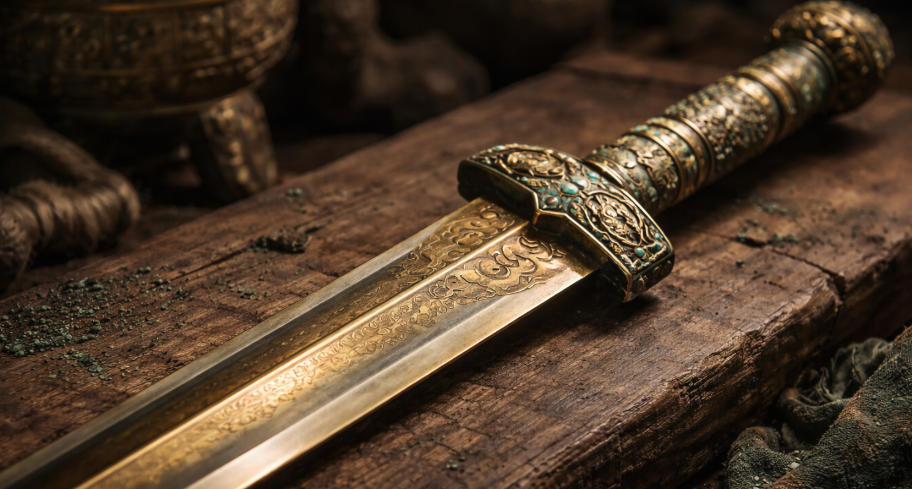
Were Bronze Swords Really Fragile, or Did They Make Ancient Warriors Deadly?
When we think of ancient warfare, bronze swords often come to mind as fragile relics of a bygone era. But the truth is far more complex. These weapons, crafted during the Bronze Age, played a pivotal role in shaping early human conflict, demonstrating both ingenuity and deadly efficiency. From ceremonial pieces to battlefield tools, bronze swords were a remarkable combination of artistry, engineering, and lethal function.
The Origins of Bronze Swords
The first bronze swords appeared around 3300 BCE, as humans transitioned from stone to metal weaponry. Bronze, an alloy of copper and tin, allowed craftsmen to produce stronger, sharper, and more durable weapons than their stone predecessors. Early swords were primarily short and suited for close combat, though over time, longer forms emerged, capable of slashing and thrusting with greater reach.
These weapons weren’t just tools of war—they symbolized status and power. Warriors and tribal leaders often carried elaborately decorated bronze swords to signify rank, while others were used in rituals or as grave offerings. The craftsmanship involved in creating a single sword required skillful casting, hammering, and polishing, making bronze swords a valuable commodity in ancient societies.

Were Bronze Swords Fragile?
Many modern misconceptions paint bronze swords as brittle or prone to breaking. While bronze is softer than iron or steel, ancient swordsmiths perfected alloy mixtures and forging techniques that maximized strength. Properly crafted bronze swords could endure intense combat, delivering precise cuts and thrusts. Archaeological finds demonstrate that some bronze swords survived centuries of wear, proving their resilience.
Moreover, the design of the weapon itself contributed to durability. Many bronze swords featured reinforced edges, tapered points, and balanced weight distribution, all improving combat performance. In the hands of a skilled warrior, a bronze sword was far from fragile—it was a deadly tool capable of decisive blows on the battlefield.
Combat Techniques and Usage
Bronze swords required technique and strategy to be effective. Unlike modern steel swords, which could rely on sheer force, bronze swords demanded precision, timing, and agility. Warriors were trained in thrusting, slashing, and parrying maneuvers, often coordinating with shields, spears, or chariots. Historical evidence shows that bronze swords were used in battle formations, duels, and ceremonial combats, highlighting their versatility.
Some of the most famous archaeological finds include short bronze daggers for stabbing and longer swords for cutting. Both types influenced early martial tactics and shaped the development of later iron and steel weapons. For students of history and martial arts enthusiasts, understanding bronze swords provides insight into the evolution of ancient weaponry and battlefield strategies.
Collecting and Studying Bronze Swords Today
Bronze swords are highly sought after by historians, archaeologists, and collectors. Authentic ancient pieces are rare, while replicas are popular among enthusiasts of Bronze Age reenactments, museum exhibitions, and educational demonstrations. Collectors appreciate the fine balance of aesthetics and functionality, from hand-cast blades to polished hilts.
Studying these swords helps us understand more than just combat; it reveals ancient metallurgy, craftsmanship, and cultural values. Enthusiasts exploring Bronze Age weaponry often research ceremonial bronze swords, warfare techniques, and historical battle accounts to gain a complete picture of their role in shaping early civilizations.

Bronze Swords: Fragile Relics or Lethal Weapons?
The debate over whether bronze swords were fragile or deadly is settled when we consider the skill, context, and ingenuity of ancient swordsmiths. Far from being mere fragile artifacts, bronze swords were engineered for combat, status, and cultural significance. Their legacy continues to inspire modern martial artists, historians, and collectors, bridging thousands of years of human innovation and warfare knowledge.
The Evolution from Bronze to Iron Swords
The development of bronze swords paved the way for iron and steel weaponry in later eras. As blacksmithing techniques advanced, iron gradually replaced bronze due to its superior strength and flexibility. However, bronze swords remained influential for centuries, setting the foundation for blade design, balance, and combat strategy. Many techniques developed for bronze swords, such as precise thrusts and sweeping strikes, were adapted and refined for later iron swords and katana, proving the lasting impact of Bronze Age innovations.
Bronze Swords in Modern Historical and Martial Studies
Today, bronze swords are more than archaeological artifacts—they are studied in historical martial arts programs, museum exhibits, and educational reenactments. Scholars analyze the metallurgy, wear patterns, and battlefield usage to better understand Bronze Age societies, warfare techniques, and cultural practices. Martial arts enthusiasts and collectors often use replicas for training or display, exploring ancient sword combat techniques, and connecting with the craftsmanship and strategy that made bronze swords both functional and symbolic.
