Chrysaor and the Golden Sword in Greek Mythology Explained
- von liqinliqin
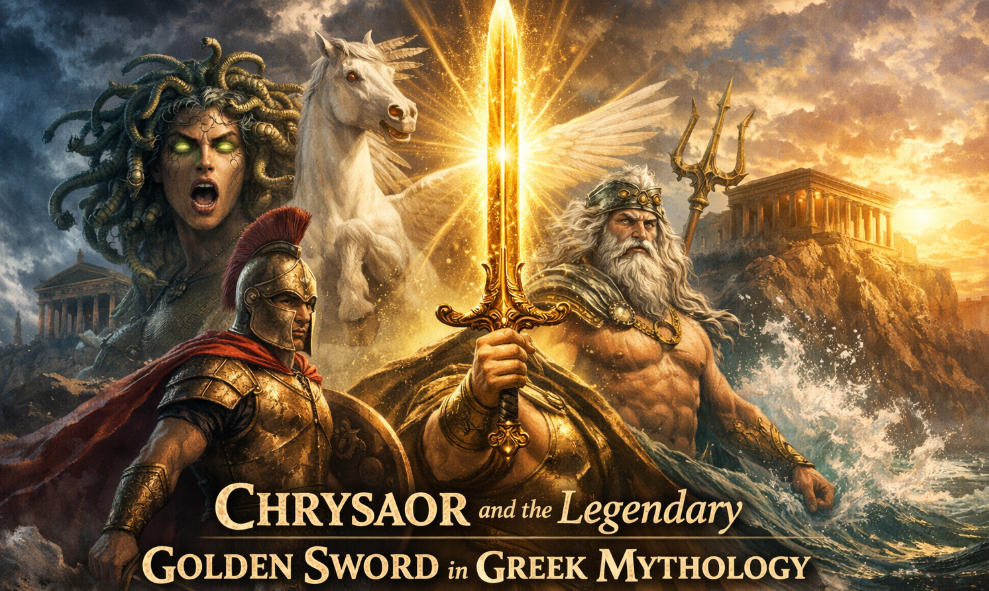
Who Was Chrysaor and Why Is the Golden Sword Important in Greek Mythology?
Among the countless legendary figures in Greek mythology, Chrysaor remains one of the most mysterious and symbolically powerful. His name literally means 'Golden Sword' or 'He Who Bears the Golden Blade,' making him closely connected to the ancient concept of divine weapons, sacred kingship, and heroic destiny.
Although Chrysaor appears less frequently in classical myths than heroes like Perseus or Achilles, the symbolism surrounding the Golden Sword of Chrysaor has continued to inspire fantasy literature, mythological weapon lore, video games, and modern pop culture.
Today, searches for terms such as golden sword mythology, Chrysaor Greek mythology, legendary Greek swords, and mythological weapons explained continue to grow as audiences rediscover ancient myths and legendary blades.
This article explores:
- The origins of Chrysaor in Greek mythology
- The meaning behind the Golden Sword
- His connection to Medusa, Pegasus, Poseidon, and Perseus
- The symbolism of divine swords in ancient Greece
- The influence of Chrysaor on fantasy culture and modern storytelling
Who Is Chrysaor in Greek Mythology?
In Greek mythology, Chrysaor was the son of the sea god Poseidon and the Gorgon Medusa. According to ancient legends, when the hero Perseus beheaded Medusa, two extraordinary beings emerged from her blood:
- Pegasus, the winged horse
- Chrysaor, the bearer of the Golden Sword
The name 'Chrysaor' derives from the Greek words:
- Chrysos — meaning gold
- Aor — meaning sword
This is why Chrysaor is often translated as:
- 'Golden Sword'
- 'Golden-Bladed One'
- 'He Who Has a Golden Sword'
Unlike Pegasus, who became one of the most famous mythical creatures in Greek legend, Chrysaor remained a more symbolic figure associated with divine authority, heroic bloodlines, and sacred weaponry.
Many mythology scholars interpret Chrysaor not simply as a warrior, but as the embodiment of the legendary Golden Sword itself.

The Birth of Chrysaor and Pegasus
The birth of Chrysaor is one of the most dramatic scenes in Greek mythology.
After Perseus defeated Medusa using divine gifts from the gods, he severed her head. From the blood of the fallen Gorgon emerged both Pegasus and Chrysaor.
This myth contains several symbolic themes that continue to fascinate historians and fantasy writers:
- Order emerging from chaos
- Heroism born through sacrifice
- Divine power rising from destruction
- Transformation through destiny
Because of this, searches for phrases like Medusa children mythology, Pegasus and Chrysaor explained, and Greek mythology golden sword origin have become increasingly popular online.
The Symbolism of the Golden Sword
Gold as Divine Power
In ancient Greek culture, gold represented immortality, sacred authority, and heavenly power.
Unlike ordinary metals, gold does not corrode or decay, which made it a symbol of eternity and divine perfection. As a result, the weapons, armor, chariots, and palaces of gods were frequently described as golden.
The Golden Sword of Chrysaor therefore symbolizes more than physical strength. It represents:
- Divine legitimacy
- Eternal glory
- Sacred kingship
- Pure heroic power
- Authority granted by the gods
In mythological symbolism, the golden sword often represents 'light overcoming darkness' and the triumph of order over chaos.
This is one reason why keywords such as golden sword symbolism, divine sword mythology, and legendary sacred weapons continue to generate high search interest.
Chrysaor's Connection to Medusa and Poseidon
To understand Chrysaor fully, it is necessary to examine his mythological lineage.
Medusa
Medusa was one of the three Gorgons and the only mortal among them. Her gaze turned mortals into stone, making her one of the most feared creatures in Greek mythology.
Poseidon
Poseidon, god of the sea, fathered Chrysaor with Medusa. This divine ancestry gave Chrysaor a direct connection to Olympian power.
Perseus
Perseus became the catalyst for Chrysaor's birth after slaying Medusa during his legendary quest.
Through this lineage, Chrysaor becomes a bridge between:
- Monsters
- Gods
- Heroes
- Divine destiny
This unique combination explains why topics like Chrysaor family tree, Medusa offspring, and Poseidon children mythology remain popular search topics today.

Chrysaor as a Symbolic Warrior
Unlike Achilles or Hercules, Chrysaor rarely appears in active adventures or battles within surviving myths.
Instead, he functions more as a symbolic figure representing:
- War and glory
- Sacred weapons
- Divine bloodlines
- Heroic destiny
- Mythological sovereignty
Some ancient depictions portray him as a powerful warrior carrying a golden blade, while later interpretations expanded his image into a legendary archetype of the 'divine swordsman.'
Because little detailed mythology survives about him, Chrysaor has become especially attractive to modern fantasy creators who reinterpret his legend in new ways.
The Golden Sword in Modern Fantasy Culture
The concept of the Golden Sword has become deeply influential in modern fantasy fiction, gaming, anime, and popular media.
Today, the archetype appears in:
- Fantasy novels
- RPG weapons
- Anime legendary swords
- Myth-inspired video games
- Sacred kingly weapons in fiction
Many fantasy 'holy swords' and 'chosen hero blades' draw inspiration from ancient mythological weapon symbolism similar to Chrysaor's Golden Sword.
Searches for:
- legendary golden sword
- mythological sword names
- Greek myth weapons
- holy sword mythology
- fantasy swords inspired by mythology
have steadily increased alongside the global popularity of fantasy entertainment.
Even modern gaming franchises have reused the name 'Chrysaor' for legendary weapons and myth-inspired equipment.
Why Chrysaor Still Fascinates Audiences Today
One reason Chrysaor continues to attract attention is because he represents a perfect mythological archetype:
- The mysterious warrior
- The divine blade bearer
- The forgotten demigod
- The embodiment of sacred power
In modern storytelling, audiences are often drawn to lesser-known mythological figures because they offer rich symbolism while leaving room for imagination.
Chrysaor's story also connects to several highly searched mythology themes:
- Greek monsters
- Legendary swords
- Divine bloodlines
- Mythological symbolism
- Ancient warrior legends
As interest in mythology-based fantasy continues growing worldwide, Chrysaor remains a compelling figure at the crossroads of ancient religion, heroic storytelling, and legendary weapon lore.
Chrysaor and the Legacy of Mythological Weapons
The Golden Sword associated with Chrysaor represents one of the earliest examples of the 'sacred weapon' archetype that later influenced Western fantasy traditions.
Across literature and mythology, divine swords frequently symbolize:
- Authority
- Destiny
- Justice
- Heroism
- Supernatural power
From ancient Greece to modern fantasy worlds, the image of the golden sword has endured as a universal symbol of legendary strength.
For this reason, Chrysaor occupies a unique position in mythological studies and fantasy
culture alike.
Conclusion: The Eternal Legend of the Golden Sword
Chrysaor may not be the most famous figure in Greek mythology, but his symbolism remains incredibly powerful.
As the son of Poseidon and Medusa, brother of Pegasus, and embodiment of the Golden Sword, he represents:
- Divine authority
- Heroic destiny
- Sacred power
- Eternal glory
- Mythological transformation
His legend continues to influence modern fantasy storytelling, sacred weapon symbolism, and the enduring fascination with legendary swords.
For anyone exploring Greek mythology weapons, golden sword legends, or the origins of sacred blades in fantasy culture, Chrysaor remains one of the most fascinating and underrated mythological figures in ancient history.
