Nagakiba Guide: Elden Ring Long Katana Origins, Build & PvP Power
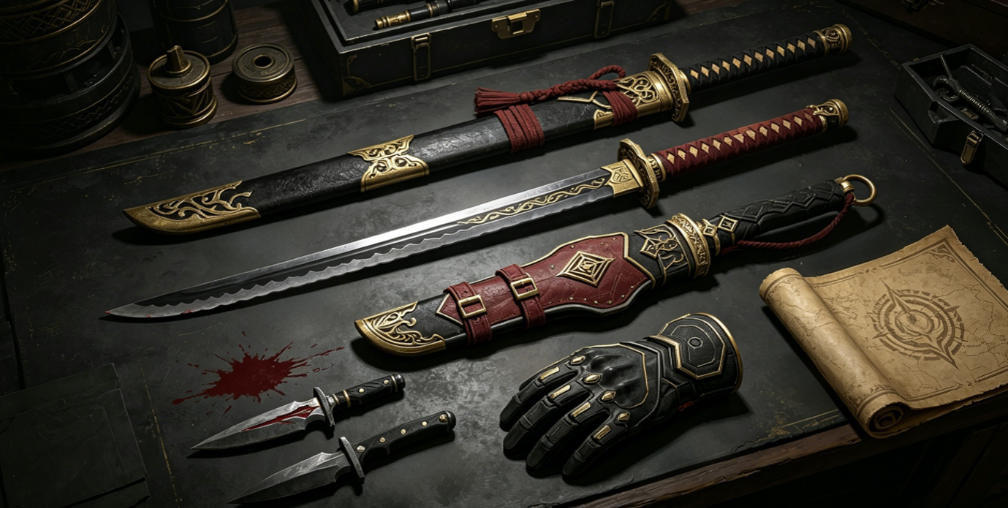
What is Nagakiba in Elden Ring and why is it considered the ultimate long katana?
In the weapon system of Elden Ring, the nagakiba (Uchigatana-long blade) stands out as one of the most recognizable katana-type weapons. It is remembered not only for its 'extreme reach,' but because it completely changes how katanas function in combat—from close-range burst dueling to long-distance spatial control.
In player communities, it is also frequently misspelled or referred to as nagikiba, but regardless of the spelling, it always points to the same weapon: a katana built around range dominance and bleed-based pressure gameplay.
What is Nagakiba? Not Just a Katana, but a Long-Range Combat Blade
If we summarize nagakiba in one sentence:
👉 It is a katana pushed to its extreme length while still preserving the 'soul' and fluidity of traditional samurai sword techniques.
However, to truly understand it, we need to move it out of normal weapon classification. It is not just a katana—it is a weapon designed around distance control.
Compared to standard katanas, nagakiba breaks three fundamental boundaries:
- Extreme blade length far beyond normal katana reach
- Attack range that approaches spear or polearm territory
- Retains fast katana-style animations (draw cuts, combos, fluid recovery)
- Fully compatible with rolling, chasing, and spacing-based combat loops
This creates a very unique identity:
👉 It is neither a heavy long weapon nor a close-range dagger—it is a 'spatial control weapon.'

In actual combat, nagakiba feels less like 'sword fighting' and more like:
👉 drawing invisible lines in space and forcing the enemy to interact with them.
- The front becomes a constant danger zone
- Mid-range becomes a pressure trap
- Approaching it feels like walking into a pre-cut battlefield
- Every swing shapes movement, not just damage
So its core identity is not raw power, but space control.
Why Nagakiba’s Design Is So Long: Three Core Inspirations
The extreme length of nagakiba is not random—it reflects a mix of historical inspiration and game design philosophy.
1. Real Samurai Battlefield Logic
Historically, Japanese swords evolved in different contexts:
- Tachi used for mounted combat
- Extended blades for battlefield reach advantage
- Weapons designed for first-strike dominance
nagakiba reflects this idea of battlefield priority over dueling aesthetics, emphasizing reach and control.
2. FromSoftware’s 'Distance Philosophy'
FromSoftware combat design often follows a core idea:
👉 The strongest weapon is not the one with highest damage, but the one that controls distance best.
nagakiba perfectly embodies this philosophy by:
- Controlling enemy approach routes
- Forcing defensive reactions before engagement
- Limiting enemy movement options through range pressure
Combat becomes less about trading hits and more about spatial decision-making.
3. Risk–Reward Weapon Design
nagakiba is powerful, but intentionally balanced:
- Advantage: extremely long reach + strong pressure
- Weakness: vulnerable in tight close-range situations
- Requirement: relies heavily on spacing and movement skill
This makes it a high-skill weapon rather than a stat-stacking tool.
Why Nagakiba Is One of the Best Bleed Katanas
In Elden Ring builds, nagakiba is most commonly used in Bleed (Hemorrhage) builds.
Its strength comes from efficiency, not single-hit damage.
1. Long Reach = Faster Bleed Application
Bleed builds rely on consistent hit frequency, and nagakiba excels because:
- Easier to hit fast-moving targets
- Safer spacing for continuous attacks
- High combo stability without losing positioning
Result:
👉 Faster and more consistent bleed buildup.
2. High Build Flexibility
nagakiba supports multiple playstyles:
- Bleed-focused setups (e.g., Seppuku builds)
- High-damage skill burst builds (draw slash style)
- Dexterity-based spacing builds
- Hybrid status effect builds
This versatility keeps it meta-relevant across patches.
3. Psychological Pressure in PvP
In PvP, nagakiba is not just a weapon—it is pressure.
- You are always within its threat range
- Approaching feels unsafe at all times
- Enemy timing becomes unpredictable under constant threat
This creates a core PvP experience:
👉 'You are pressured before you even engage.'
Nagakiba vs Normal Katanas: Key Differences
1. Combat Space
Normal katanas: close-range dueling
nagakiba: mid-to-long range control
2. Combat Rhythm
Normal katanas: fast exchanges
nagakiba: spacing, baiting, and controlled pressure
3. Tactical Role
Normal katanas: damage-focused weapons
nagakiba: control-focused weapons

What is Nagikiba? Why Do Players Search It?
nagikiba is not an official weapon name, but a common community misspelling or phonetic variation of nagakiba.
In simple terms:
👉 nagikiba = nagakiba (same weapon)
This variation exists due to:
- Differences in Japanese-to-English transliteration
- Typing shortcuts or spelling mistakes
- Community slang and repeated misinformation
- Video titles and guide inconsistencies
Regardless of spelling, the weapon mechanics remain identical.
Nagakiba’s Core Identity: A Distance Control Weapon
In Elden Ring, nagakiba is unique not because of raw damage, but because it redefines combat distance itself.
If normal weapons ask:
👉 'How do I hit the enemy?'
nagakiba asks:
👉 “How do I control space before the enemy can even approach?”
Its key characteristics:
- Extremely long reach creates dominant spacing
- Maintains agile katana movement style
- Applies constant pressure through positioning
It becomes less of a sword and more of a controllable danger zone.
Why Nagakiba Is a 'Rhythm Control Weapon'
nagakiba’s true strength is not burst damage—it is tempo control.
Its combat logic includes:
- Forcing early reactions through reach advantage
- Creating psychological pressure through constant threat
- Preventing stable enemy offense
- Cycling pressure through movement and spacing
In PvP especially, this becomes overwhelming:
👉 One mistake in spacing leads to full control loss.
Who Should Use Nagakiba?
nagakiba is ideal for players who:
- Prefer mid-range control over close combat
- Enjoy spacing, footwork, and timing-based gameplay
- Build Dexterity or Bleed-focused characters
- Like psychological pressure in PvP fights
- Prefer consistency over one-shot burst damage
It may not be the most explosive weapon, but it is often one of the hardest to deal with.
Advanced Play: Why High-Level Players Build Around Nagakiba
At high skill levels, nagakiba becomes a core system, not just a weapon.
Its gameplay structure usually includes:
- Spatial control through extended reach zoning
- Status buildup via consistent bleed pressure
- Rhythm disruption through hit-and-move patterns
This creates a loop:
👉 You are not simply fighting—you are controlling how the fight happens.
Conclusion: Nagakiba Is a Distance-Defined Weapon System
The true identity of nagakiba / nagikiba is not its blade, but its philosophy:
👉 Victory is determined before contact—through distance control.
This is why it remains one of Elden Ring’s most iconic katanas—not because it is the strongest, but because it is the smartest.
