Real Samurai Swords: History, Types, Authentic Katana & Nihonto
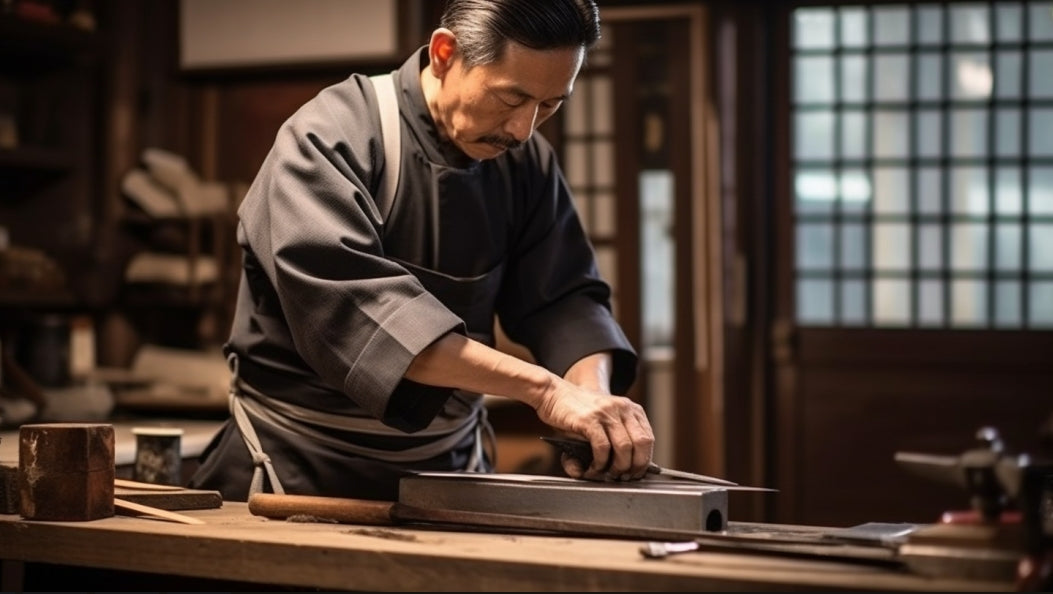
Are There Any Real Samurai Swords Left Today and How Can You Identify Them?
The samurai sword is one of the most recognizable symbols of Japanese history. For centuries, Japanese swords were carried by samurai warriors and served as weapons, status symbols, family heirlooms, and works of art. Even today, people around the world continue to search for real samurai swords, authentic katana, and historically accurate Japanese swords.
But an important question remains: Are there any real samurai swords left today?
The short answer is yes. Thousands of historical Japanese swords have survived, although their condition, age, authenticity, and legal status can vary considerably. Some are preserved in museums, temples, shrines, private collections, and Japanese sword societies, while others remain in the hands of collectors.
However, not every sword marketed as a 'samurai sword' is a genuine historical blade. Modern reproductions, decorative katana, handmade replicas, and traditionally forged Japanese swords are very different from surviving antique nihonto.
This guide explains what qualifies as a real samurai sword, which types of Japanese swords still exist, how authentic blades are identified, and where these historic weapons can be found today.
What Is a Real Samurai Sword?
A real samurai sword generally refers to a genuine Japanese sword made using traditional Japanese sword-making techniques and associated with the historical Japanese sword tradition.
The Japanese term nihonto (日本刀) is commonly used for traditionally made Japanese swords.
Not every Japanese sword is a katana. The Japanese sword tradition includes several different forms, each developed for different periods and purposes.
Important types include:
-
Katana
-
Tachi
-
Wakizashi
-
Tanto
-
Odachi
-
Nodachi
These swords vary in blade length, mounting style, carrying method, and historical use.
A genuine antique Japanese sword may be hundreds of years old, while a modern traditionally forged sword can also be considered a Japanese sword without being a historical samurai weapon.
This distinction is essential when searching for an authentic Japanese sword.
Are There Still Real Samurai Swords Today?
Yes. Real samurai swords still exist, although the samurai class itself disappeared during Japan's modernization in the 19th century.
Historical swords survived because many were preserved as:
-
Family heirlooms
-
Museum artifacts
-
Shrine treasures
-
Temple collections
-
Cultural properties
-
Private collections
-
Martial arts equipment
Some famous Japanese swords are designated as cultural properties and carefully preserved because of their historical and artistic importance.
Others remain privately owned and may be passed through generations.
The survival of these swords allows historians and collectors to study the development of Japanese sword craftsmanship across different historical periods.
How Many Samurai Swords Have Survived?
It is difficult to provide an exact number because Japanese swords were produced for more than a thousand years, and many were lost, damaged, remounted, altered, or destroyed.
Large numbers of Japanese swords survived from the medieval and early modern periods.
However, survival does not necessarily mean that every blade remains in its original condition.
A historical sword may have undergone:
-
Re-polishing
-
New mounting
-
Replacement of the handle
-
Replacement of the scabbard
-
Restoration
-
Shortening
-
Changes to its fittings
Japanese sword collectors therefore examine not only the blade itself but also its mei, or signature, provenance, construction, polish, and overall condition.
The History of Real Samurai Swords
The history of the Japanese sword developed over many centuries.
Early Japanese blades were influenced by continental Asian sword-making traditions. Over time, Japanese swordsmiths developed distinctive forging and heat-treatment techniques.
By the medieval period, curved blades became increasingly important for mounted warfare.
The tachi was one of the most important early curved Japanese swords.
Later, the katana became the most recognizable sword associated with the samurai.
This evolution was influenced by changes in:
-
Battlefield tactics
-
Armor
-
Cavalry warfare
-
Infantry combat
-
Political organization
-
Sword-making technology
The history of the samurai sword is therefore much more complex than the simple image of a single curved katana.
Katana: The Most Famous Samurai Sword
The katana is undoubtedly the most famous Japanese sword in the world.
It features:
-
A curved single-edged blade
-
Long grip
-
Circular or shaped guard
-
Distinctive fittings
-
A scabbard known as a saya
Unlike the earlier tachi, the katana was traditionally worn with the cutting edge facing upward.
This allowed the sword to be drawn quickly and used in a single flowing movement.
The katana became particularly important during the Muromachi and later periods and remains the defining image of the samurai sword today.

Tachi: The Earlier Samurai Sword
The tachi is an older Japanese sword characterized by a pronounced curve and traditional mounting system.
It was generally worn suspended from the belt with the cutting edge facing downward.
This design was particularly suited to mounted warriors.
Many surviving historical Japanese swords began as tachi and were later shortened or remounted for different uses.
This means that the history of a single real Japanese sword can sometimes include multiple periods and configurations.
Wakizashi: The Samurai's Companion Sword
The wakizashi is a shorter Japanese sword traditionally worn alongside the katana.
Together, the katana and wakizashi formed the famous daisho, meaning “large and small.”
The wakizashi was useful for:
-
Close-quarter combat
-
Indoor fighting
-
Situations where a long sword was inconvenient
-
Everyday carrying
It also became an important symbol of samurai status.
Today, authentic wakizashi are highly sought after by Japanese sword collectors.

Tanto: The Japanese Samurai Dagger
The tanto is a short Japanese blade generally classified as a dagger rather than a sword.
Tanto were used for:
-
Personal defense
-
Close combat
-
Utility purposes
-
Ceremonial and status functions
Some historical tanto feature extremely sophisticated blade construction and beautiful artistic details.
Because of their smaller size, surviving tanto can be particularly interesting for collectors of authentic Japanese blades.
Odachi and Nodachi: Giant Japanese Swords
Not every Japanese sword was compact.
The odachi and nodachi were extremely large swords associated with battlefield use.
Their long blades made them difficult to carry and handle compared with katana, but they could provide considerable reach.
Large Japanese swords were sometimes used by warriors on the battlefield, while others were dedicated to ceremonial or religious purposes.
Today, oversized Japanese swords are especially popular among collectors and fans of historical Japanese weapons.
What Makes a Japanese Sword Authentic?
Determining whether a sword is a real samurai sword requires more than simply looking at its appearance.
Collectors and experts may examine:
Blade Construction
Traditional Japanese swords are typically forged from steel through specialized processes involving folding, forging, and heat treatment.
The blade may display visible features such as:
-
Hada – grain pattern
-
Hamon – temper line
-
Boshi – hardened area around the point
These features can provide important clues about the blade's construction and history.
Tang and Signature
The hidden portion of a Japanese sword blade is called the nakago.
It may contain:
-
Swordsmith's signature
-
Date
-
School or tradition markings
-
File patterns
-
Other historical information
The nakago is particularly important when authenticating an antique Japanese sword.
A signature alone, however, does not automatically prove authenticity because forged or copied signatures exist.
What Is Nihonto?
The term nihonto generally means a traditionally made Japanese sword.
It is often used when discussing authentic Japanese sword craftsmanship and historical blades.
Nihonto may include different types of Japanese swords, including:
-
Katana
-
Tachi
-
Wakizashi
-
Tanto
A nihonto should not automatically be confused with every modern katana sold commercially.
A modern decorative katana may resemble a traditional Japanese sword but lack traditional construction or historical provenance.

Antique Samurai Swords vs Modern Katana
One of the most important distinctions for buyers and collectors is the difference between an antique sword and a modern reproduction.
Antique Japanese Sword
A historical blade may:
-
Be hundreds of years old
-
Have documented provenance
-
Be signed by a historical swordsmith
-
Require professional restoration
-
Have cultural or collectible value
Modern Katana
A modern sword may be:
-
Newly manufactured
-
Hand forged
-
Made from carbon steel
-
Inspired by historical Japanese designs
-
Created for display, martial arts, or collection
A modern real katana can be a genuine functional sword without being an antique samurai sword.
This distinction helps prevent confusion when shopping for a samurai sword replica or traditionally made Japanese sword.
How Were Real Samurai Swords Made?
Traditional Japanese swordsmithing is a highly specialized craft.
The process historically involved several stages.
Steel Preparation
Traditional swordsmiths worked with Japanese steel, including tamahagane, produced from iron sand in a traditional furnace known as a tatara.
The steel was selected and refined according to its quality and carbon content.
Forging
The swordsmith repeatedly heated, hammered, folded, and welded the steel.
This process helped refine the material and create the characteristic structure associated with Japanese sword blades.
Differential Hardening
The blade could be coated with clay before heating and quenching.
This created different cooling rates across the blade and helped produce a hard cutting edge while retaining greater toughness in the body of the blade.
The visible hamon is one of the most recognizable features produced by this process.
Polishing
Japanese sword polishing is itself a specialized craft.
A traditional polisher uses progressively finer stones to reveal:
-
Blade geometry
-
Hamon
-
Hada
-
Point structure
-
Surface details
A high-quality Japanese sword can require significant time and expertise simply to polish and maintain.
Why Are Real Samurai Swords So Valuable?
The value of a genuine historical Japanese sword can depend on many factors.
These include:
-
Age
-
Swordsmith
-
School
-
Historical significance
-
Condition
-
Blade quality
-
Signature
-
Provenance
-
Certification
-
Mountings
A famous swordsmith's blade can be extremely valuable, especially when supported by reliable documentation.
However, age alone does not guarantee high value.
A poorly preserved antique sword may be less desirable than a well-maintained blade with strong historical and artistic qualities.
Where Can You See Real Samurai Swords?
Many genuine Japanese swords can be found in museums and cultural institutions.
Important collections exist in:
-
Japan
-
The United States
-
Europe
-
Other countries with Japanese art collections
Japanese shrines and temples also preserve historically significant blades.
Some swords remain in private collections, although access to these blades depends on their owners and local regulations.
For people interested in samurai sword history, museums provide one of the safest ways to study authentic Japanese blades without the challenges involved in purchasing and transporting antique weapons.
Can You Buy a Real Samurai Sword Today?
Yes, but the phrase 'real samurai sword' can mean different things.
Collectors may be looking for:
-
Antique Japanese swords
-
Authentic nihonto
-
Modern traditionally forged katana
-
Handmade katana replicas
-
Functional Japanese-style swords
These categories should not be confused.
A genuine antique nihonto is a historical artifact, while a modern handmade katana is a newly produced sword inspired by traditional Japanese craftsmanship.
Before purchasing an antique Japanese sword, buyers should carefully research:
-
Authenticity
-
Documentation
-
Seller reputation
-
Condition
-
Import and export restrictions
-
Local ownership laws
Japanese swords can be regulated differently depending on the country.
Are Samurai Swords Still Made Today?
Yes. Traditional Japanese swordsmithing continues today, although the craft is highly regulated in Japan.
Modern Japanese swordsmiths can produce traditionally made blades using established methods and materials.
At the same time, sword makers outside Japan produce Japanese-style katana using modern steels and manufacturing techniques.
These swords can be excellent examples of modern craftsmanship, but they should not automatically be described as historical nihonto.
The distinction between traditional Japanese swords, antique blades, and modern replicas is important for collectors.
Real Samurai Swords vs Katana Replicas
A replica is not necessarily a low-quality sword.
Modern sword replicas can be made for:
-
Historical collections
-
Martial arts
-
Display
-
Reenactment
-
Cutting practice
-
Cosplay
Materials such as 1060, 1095, T10, and other carbon steels are commonly used in modern sword production.
Features such as:
-
Full tang construction
-
Proper heat treatment
-
Balanced blade geometry
-
Quality fittings
-
Secure handle construction
can significantly influence the quality of a modern katana.
However, a modern replica should still be clearly distinguished from an antique samurai sword.
How to Identify a Real Samurai Sword
If you are trying to determine whether a Japanese sword is authentic, avoid relying on a single visual feature.
Instead, consider:
-
Blade geometry
-
Hamon
-
Hada
-
Nakago
-
Mei
-
Mountings
-
Provenance
-
Professional appraisal
-
Certification
Professional evaluation is particularly important for expensive antique blades.
Online photographs can be useful for preliminary research but cannot always establish authenticity.
Why Are Samurai Swords Still Popular?
The fascination with samurai swords goes far beyond their role as weapons.
They represent:
-
Japanese history
-
Samurai culture
-
Traditional craftsmanship
-
Martial arts
-
Art and metallurgy
-
Family heritage
-
Japanese aesthetics
The katana has also become a major symbol in modern movies, anime, video games, and popular culture.
From historical samurai films to anime characters carrying legendary katana, the Japanese sword remains one of the most recognizable weapons in the world.
Conclusion: Are There Any Real Samurai Swords Left?
So, are there any real samurai swords left?
Absolutely.
Thousands of historical Japanese swords have survived in museums, shrines, private collections, and family collections. Some are centuries old and are considered important examples of Japanese cultural heritage.
However, not every sword described as a real samurai sword is an antique.
The modern market includes antique nihonto, traditionally forged Japanese swords, handmade katana, historical replicas, decorative swords, and modern Japanese-style blades.
Understanding the difference between these categories is essential for anyone interested in authentic Japanese swords, real katana, or samurai sword history.
Whether you are researching an antique tachi, collecting a wakizashi, studying traditional katana craftsmanship, or simply interested in the history of the samurai, surviving Japanese swords provide a remarkable connection to the warriors, craftsmen, and culture of Japan's past.
