Spartan Sword: History, Xiphos, Design & Ancient Greek Warfare
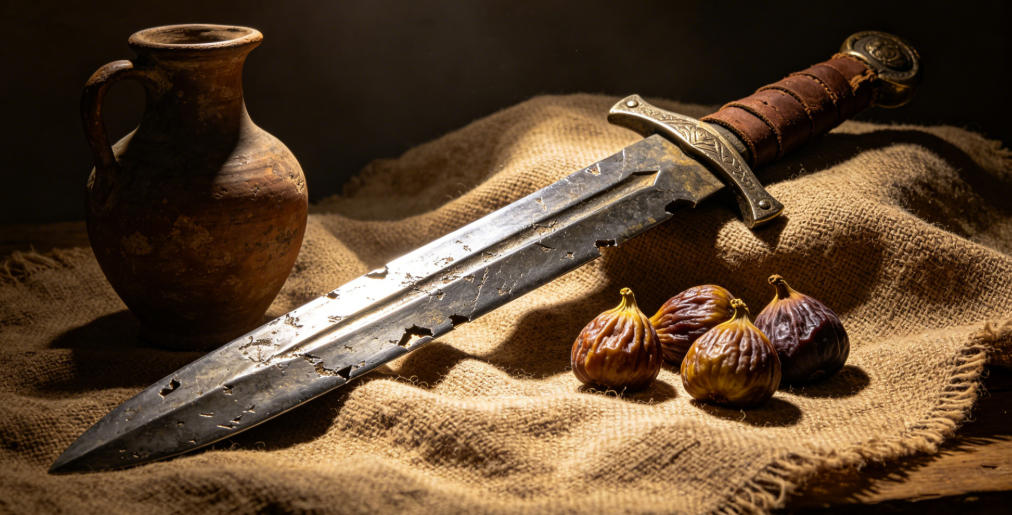
What Sword Did Spartans Use and Why Was the Spartan Sword So Short?
The Spartan sword is one of the most recognizable weapons associated with ancient Greece. Closely connected with the legendary warriors of Sparta, this short sword has become a powerful symbol of discipline, courage, military training, and ancient Greek warfare.
When people search for Spartan sword history, they often imagine a heavily armed Spartan warrior carrying a short sword alongside a large shield and spear. While popular culture has made the Spartan sword famous, the historical reality is more interesting. The sword was generally a secondary weapon rather than the primary weapon of the Spartan hoplite.
So, what sword did Spartans use? How was the Spartan sword different from other ancient Greek swords? Why was it relatively short, and how did Spartan warriors use it in battle?
This guide explores the history of the Spartan sword, its origins, design, battlefield role, relationship with the xiphos and other ancient Greek weapons, and why the sword remains popular among collectors and history enthusiasts today.
What Was the Spartan Sword?
The Spartan sword was a short sword associated with Spartan hoplites and other Greek warriors.
The most common sword traditionally associated with Spartan infantry was the xiphos, a straight, double-edged Greek sword. It was carried as a secondary weapon alongside the long spear known as the dory.
The xiphos typically featured:
-
A short blade
-
Double edges
-
A pointed tip
-
A straight or slightly leaf-shaped profile
-
A compact hilt
Its relatively small size made it particularly practical in close combat.
For a Spartan fighting inside a tightly packed hoplite formation, a shorter sword could be easier to control than a long blade.
The Spartan sword was therefore not designed simply to maximize reach. Its design reflected the tactical realities of ancient Greek warfare.

What Sword Did Spartans Use?
The answer depends partly on the historical period and the individual warrior, but the xiphos is the sword most strongly associated with Spartan hoplites.
The xiphos was not exclusive to Sparta. It was used throughout the Greek world and formed part of the standard equipment of many hoplite warriors.
Another weapon associated with Spartan warriors was the kopis, a curved, single-edged blade designed primarily for powerful cutting attacks.
This means that there was not necessarily one universal Spartan sword used by every Spartan warrior throughout history.
Instead, Greek sword design changed according to period, military role, and individual equipment.
The most useful distinction is:
-
Xiphos – straight, double-edged short sword
-
Kopis – curved, single-edged cutting weapon
-
Dory – long spear and primary hoplite weapon
This broader context is essential when studying Spartan sword history.
Spartan Sword History and Ancient Greek Warfare
The history of the Spartan sword is closely connected with the development of the hoplite phalanx.
Spartan warriors were trained to fight as part of a disciplined formation rather than as individual swordsmen.
The hoplite carried a large round shield, usually called an aspis, and a long spear.
The spear provided:
-
Greater reach
-
Offensive power
-
Formation control
-
Protection through coordinated fighting
The sword was a backup weapon.
If a spear broke, became difficult to use, or the battle moved into extremely close quarters, the warrior could draw his sword.
This explains why the traditional Spartan sword was relatively short.
Why Were Spartan Swords So Short?
One of the most frequently asked questions about the Spartan sword is why it was much shorter than many other famous swords.
The answer is closely connected with Spartan fighting tactics.
In a dense hoplite formation, warriors stood close together. Large sword swings could be difficult because shields, spears, and fellow soldiers occupied much of the available space.
A compact blade allowed the warrior to:
-
Strike at close range
-
Maneuver around shields
-
Attack vulnerable areas
-
Maintain better control
-
Fight effectively when formations became compressed
Later traditions famously emphasize the extremely short Spartan sword.
This has contributed to the popular image that Spartan warriors deliberately preferred unusually short weapons because they were trained to fight at extremely close range.
The exact dimensions and equipment varied, however, and modern representations should not be treated as universal historical standards.
Spartan Sword vs Xiphos
The terms Spartan sword and xiphos are sometimes used interchangeably, but they are not technically identical.
The xiphos was a general Greek sword type rather than a weapon exclusively created for Sparta.
Its design usually included:
-
Straight blade
-
Double-edged cutting surfaces
-
Pointed tip
-
Compact dimensions
Because Spartan hoplites used xiphos swords, the weapon became strongly associated with Spartan military culture.
This is why a Spartan xiphos is one of the most common historical interpretations of a Spartan sword today.
The distinction matters because it prevents the common misconception that the Spartans invented the xiphos.
Spartan Sword vs Kopis
Another important comparison is the xiphos vs kopis.
Both were important ancient Greek sword forms, but their designs were very different.
Xiphos
The xiphos was:
-
Straight
-
Double-edged
-
Compact
-
Suitable for cutting and thrusting
Kopis
The kopis was:
-
Curved
-
Usually single-edged
-
Heavier toward the front
-
Optimized for powerful cutting
The kopis is often associated with cavalry and other Greek military contexts, while the xiphos is more strongly associated with hoplite infantry.
This difference demonstrates that ancient Greek weapons were highly specialized rather than based on one universal sword design.
Spartan Warriors and the Role of the Sword
The image of a Spartan warrior is usually dominated by the famous red cloak, bronze helmet, large shield, spear, and short sword.
But the sword was only one component of Spartan military equipment.
A Spartan hoplite relied on several pieces of equipment working together.
The Shield
The large round shield protected the warrior and the soldier standing beside him.
It was one of the most important parts of the hoplite formation.
The Spear
The long spear was generally the main offensive weapon.
It gave Spartan warriors reach against opponents carrying shorter weapons.
The Sword
The sword served as a backup weapon for close combat.
This combination created a highly effective military system.
The famous Spartan sword therefore makes the most sense when viewed as part of the complete Spartan hoplite equipment rather than as an independent weapon.
The Spartan Sword at Thermopylae
The Spartan sword is strongly associated with the Battle of Thermopylae in 480 BCE.
The battle became famous because King Leonidas and a relatively small Greek force resisted the much larger Persian army at the narrow pass of Thermopylae.
Modern movies often portray Spartan warriors fighting primarily with swords.
Historically, however, the Spartan hoplite's spear and shield were central to the fighting.
As combat became increasingly close and weapons were damaged or lost, swords would have become important.
The famous story of the Spartans fighting until their weapons were exhausted has helped transform the short sword into one of the most powerful symbols of Spartan resistance.
Spartan Sword Design
The historical Spartan sword design was practical rather than excessively decorative.
A typical xiphos-inspired sword could include:
-
A double-edged steel blade
-
Central ridge
-
Pointed tip
-
Short grip
-
Compact guard
-
Pommel for balance
The blade geometry was designed to provide both cutting and thrusting capability.
Because the sword was relatively short, the warrior could maintain control during close combat.
Modern Spartan sword replicas often exaggerate blade dimensions or decoration for visual impact, so collectors interested in historical accuracy should compare modern designs with archaeological examples.
How Were Spartan Swords Made?
Early Greek sword production involved both bronze and iron technology.
During the development of Iron Age Greek warfare, iron became increasingly important for practical weapons.
Swordsmiths had to create blades that combined:
-
Strength
-
Hardness
-
Flexibility
-
Edge retention
-
Proper balance
The development of iron metallurgy allowed ancient Greek craftsmen to produce durable weapons suitable for repeated battlefield use.
Modern historical reproductions may use carbon steels such as:
-
1060 carbon steel
-
1095 high carbon steel
-
1075 steel
-
Spring steel
These modern materials should not be confused with the exact metallurgy used by ancient Greek swordsmiths, but they can be used to create durable historical reproductions.
Spartan Sword and Ancient Greek Swordsmanship
The Spartan sword was designed for close combat rather than elaborate fencing.
The hoplite system emphasized formation discipline, shield use, spear fighting, and coordinated movement.
When swords became necessary, their short dimensions made them effective in crowded fighting conditions.
A warrior could use the blade with relatively limited movement, making it practical when surrounded by shields and other soldiers.
This differs significantly from the image of later medieval knights performing large sword swings in open combat.
Ancient Greek swordsmanship was closely connected to the formation-based nature of hoplite warfare.
What Made Spartan Warriors So Famous?
The reputation of the Spartan warrior did not come from the sword alone.
Spartan society developed a military culture centered around discipline and collective responsibility.
Young Spartan males traditionally underwent the agoge, a demanding educational and training system that became an important part of Spartan identity.
Spartan military culture emphasized:
-
Discipline
-
Endurance
-
Obedience
-
Group cohesion
-
Physical training
-
Military readiness
The sword therefore became a symbol of a much larger warrior culture.
The famous Spartan image was built around the combination of training, shield, spear, sword, and collective battlefield discipline.

Spartan Sword Meaning and Symbolism
The Spartan sword has become a symbol of:
-
Courage
-
Discipline
-
Sacrifice
-
Military strength
-
Warrior culture
-
Ancient Greek history
The sword is particularly powerful because it represents the individual warrior while also being part of the larger Spartan military system.
In modern culture, it is often used as a symbol of determination and resistance.
This symbolic meaning has helped make the Spartan sword popular far beyond historical reenactment.
Spartan Sword in Movies, Games and Popular Culture
Modern entertainment has dramatically increased interest in Spartan swords.
The most famous example is the movie 300, which introduced millions of viewers to a stylized version of Spartan warfare.
Modern depictions often show:
-
Extremely short swords
-
Large round shields
-
Spear and sword combinations
-
Bronze helmets
-
Red cloaks
-
Muscular Spartan warriors
Video games and historical fiction have further popularized the image.
While these portrayals are often dramatically exaggerated, they have encouraged new interest in Spartan history, ancient Greek weapons, and historical sword replicas.
How to Choose a Spartan Sword Replica
A modern Spartan sword replica can be an attractive addition to a historical collection.
When choosing one, consider several factors.
Historical Accuracy
Look for a sword based on archaeological or museum examples.
Pay attention to:
-
Blade length
-
Blade shape
-
Guard
-
Grip
-
Pommel
-
Scabbard
Blade Material
Modern replicas may use:
-
Carbon steel
-
High carbon steel
-
Stainless steel
-
Pattern-welded steel
For functional swords, heat treatment and construction are generally more important than simply selecting a particular steel name.
Intended Purpose
Determine whether the sword is intended for:
-
Display
-
Historical collection
-
Reenactment
-
Costume
-
Martial arts
-
Cutting practice
A decorative sword and a functional sword should not be treated as the same product.
Why Is the Spartan Sword Still Popular?
The popularity of the Spartan sword comes from the combination of history and symbolism.
It represents one of the most famous warrior cultures of the ancient world.
People interested in the weapon may also be interested in:
-
Spartan warriors
-
Ancient Greek history
-
Greek hoplite weapons
-
Battle of Thermopylae
-
Xiphos swords
-
Ancient Greek armor
-
Historical sword replicas
The sword's compact size also makes it visually distinctive compared with longer European swords and Japanese katana.
Conclusion: The Legacy of the Spartan Sword
The Spartan sword remains one of the most recognizable weapons of ancient Greek warfare.
Although popular culture often portrays Spartans as sword-focused warriors, historical Spartan hoplites primarily relied on the spear and shield. The sword served as an important secondary weapon when combat became too close for effective spear use.
The xiphos is the sword type most commonly associated with Spartan infantry, while other Greek weapons such as the kopis served different tactical roles.
Understanding the sword within the broader hoplite system reveals why its compact design was so effective.
From the battlefield of Thermopylae to modern movies, games, museums, and Spartan sword replicas, the weapon has evolved from a practical ancient battlefield tool into an enduring symbol of Spartan courage and military culture.
For anyone interested in Spartan sword history, ancient Greek weapons, Greek hoplite warfare, or historical sword collecting, the Spartan sword offers a fascinating connection to one of the most famous warrior societies of the ancient world.
