Ultimate Guide to Swords: Samurai Katana, Khopesh & Legendary Weapons
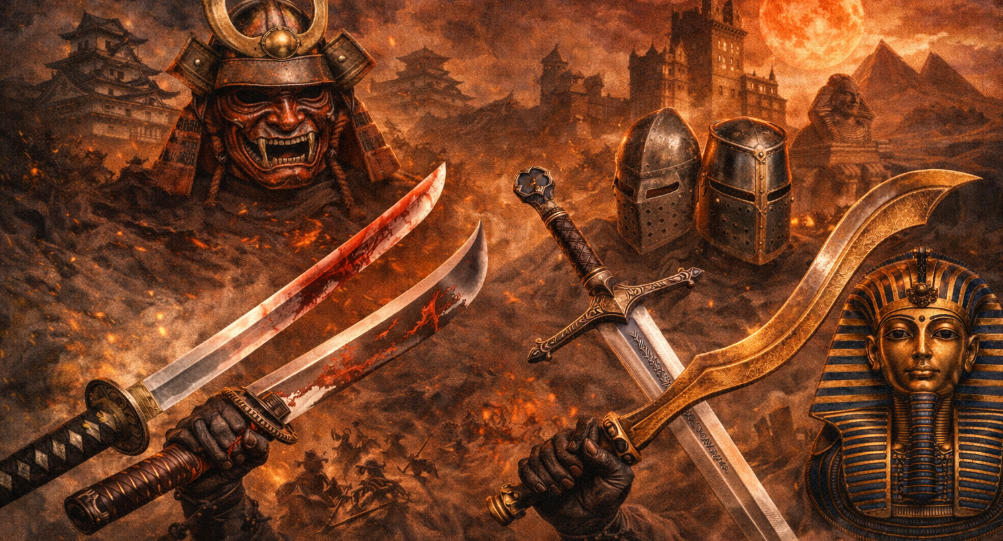
What Are the Most Famous Swords from Samurai Katanas to Ancient Khopesh?
Swords have been one of humanity’s most iconic weapons for thousands of years. From the legendary samurai katana of Japan to the ancient khopesh of Egypt, swords have shaped history, warfare, and culture around the world. Understanding different types of swords, their design, materials, and combat techniques provides a fascinating insight into global history, martial traditions, and the artistry behind these legendary warrior weapons.
Samurai Katana: The Spirit of Japanese Warriors
The katana is perhaps the most famous Japanese sword, celebrated for its curved, single-edged blade and exceptional sharpness. More than just a weapon, the katana symbolized the samurai’s honor, discipline, and adherence to Bushido. Samurai warriors trained rigorously in kenjutsu, mastering precise strikes, defensive maneuvers, and quick-draw techniques (iaijutsu) that could turn the tide of battle in an instant.
The katana was traditionally paired with a wakizashi, forming the daisho set, which represented the social status and combat readiness of a samurai. Samurai also relied on armor and polearms for battlefield versatility, combining swords with naginata and yari spears depending on the combat scenario.

European Swords: Longswords, Rapiers, and Medieval Warfare
Across Europe, longswords dominated medieval battlefields from the 11th to the 15th centuries. These swords featured straight, double-edged blades ideal for cutting, thrusting, and countering armored foes. Knights developed intricate techniques in historical European martial arts (HEMA), including grappling, parrying, and thrusts, often using a combination of shield and sword.
By the Renaissance, the rapier became a favored weapon for duels and civilian self-defense. Its long, slender blade emphasized speed and precision over brute force, reflecting the changing nature of combat in European cities. Decorative hilt designs and engraved blades also became symbols of wealth and prestige, blending functionality with artistry.
Ancient Swords: The Khopesh, Scimitar, and Cultural Innovation
The khopesh, an ancient Egyptian sword with a distinctive sickle-shaped blade, exemplifies early innovation in weapon design. It allowed warriors to slash and hook opponents in close combat, proving effective both in warfare and ceremonial displays. Similarly, the scimitar, originating in the Middle East, featured a curved blade optimized for mounted combat. These ancient swords demonstrate how geography, tactics, and culture shaped weapon evolution.
Other notable ancient swords include the Greek xiphos, a short, double-edged blade ideal for infantry combat, and the Roman gladius, famed for its role in legionary warfare. Each design reflects tactical priorities, such as speed, reach, and durability.
Materials and Craftsmanship: Forging Legendary Blades
Across cultures, the material and craftsmanship of swords determined their effectiveness. Japanese katanas were crafted using folded high-carbon steel, creating a resilient, razor-sharp edge. European Damascus steel swords achieved strength and flexibility through layered forging techniques, while ancient Egyptian smiths combined bronze and copper alloys to balance sharpness and durability. Handles, guards, and pommels were carefully designed for grip, balance, and protection, showcasing artistry in combat tools.

Sword Fighting Techniques: From Martial Arts to Battlefield Strategy
Swordsmanship is both an art and a science. Samurai developed kenjutsu, iaijutsu, and battlefield strategies emphasizing timing, distance, and decisive strikes. European knights trained in HEMA, mastering armored combat, thrusts, and fencing techniques suited for dueling or war. Middle Eastern warriors refined cavalry swordplay, optimizing scimitar and saber techniques for mounted attacks. Understanding these styles offers insight into the discipline, strategy, and skill required to master historical swords.
Collecting Swords and Their Cultural Influence
Today, swords are more than weapons—they are prized as historical artifacts, collectibles, and works of art. Collectors seek authentic katana swords, longswords, and khopesh replicas for their craftsmanship, historical significance, and cultural value. Swords also influence modern entertainment, appearing in anime, video games, movies, and novels, keeping the legacy of legendary warriors alive for new generations.
Martial arts schools and reenactment groups further preserve traditional techniques, offering hands-on experience with samurai swords, medieval European swords, and other historical weapons.
Understanding the Legacy of Swords
From the samurai katana to the ancient khopesh, swords tell the story of human innovation, culture, and combat. They are symbols of honor, skill, and historical identity, representing the values and techniques of warriors throughout history. Studying swords provides insight not only into martial traditions but also into the artistry, engineering, and strategic thinking that shaped civilizations worldwide.
Whether on the battlefield, in the hands of a samurai, or as a collectible masterpiece, swords continue to captivate the imagination and preserve the legacy of legendary warriors from every era.
