Urumi Sword Explained: India’s Deadliest Whip Blade & Martial Legend
What Is the Urumi Sword and How Was It Used in Indian Martial Arts?
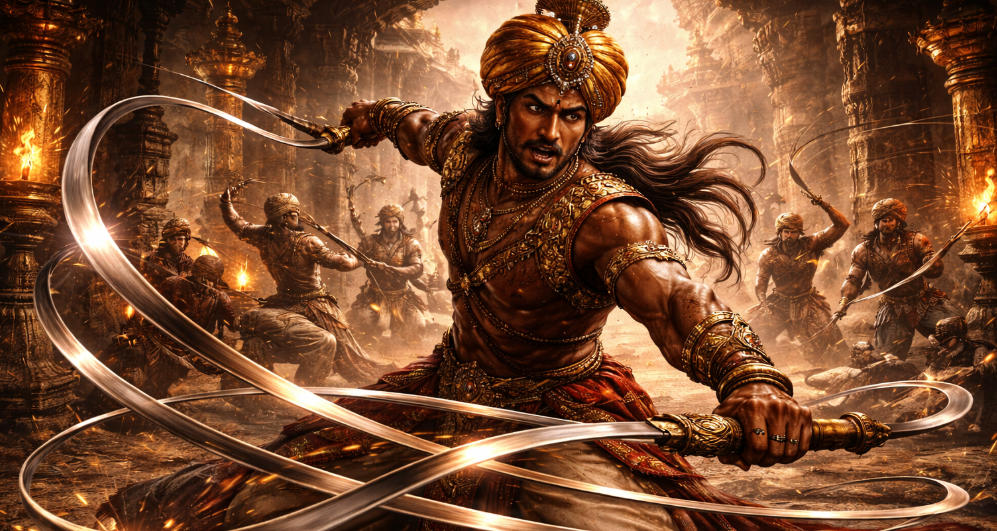
The Urumi sword is one of India’s most unique and dangerous weapons, often called a whip blade due to its long, flexible, and razor-sharp design. Originating in South India, particularly in Kerala and Tamil Nadu, the Urumi has been a staple of Kalaripayattu, one of the world’s oldest martial arts. Unlike rigid swords, the Urumi blade can coil, lash, and strike multiple opponents at once, earning it a fearsome reputation among warriors, martial artists, and collectors of historical and legendary swords.
Origins and History of the Urumi Sword
The Urumi sword dates back several centuries and was primarily used by warriors in South India. Historical records suggest it was a weapon of choice for elite fighters during regional battles and defense of temples. Its whip-like design allowed skilled warriors to wield it with both offense and defense in mind.
- Materials and construction: Traditional Urumi swords were forged from tempered steel, sometimes extending over 4–5 feet. Modern replicas use stainless steel or carbon steel for safety.
- Types of Urumi: Some Urumis have single blades, while others feature double blades that coil independently, increasing lethality.
- Tactical advantages: Its flexible design allowed fighters to strike from unexpected angles, ensnare enemies’ weapons, and cover multiple opponents simultaneously.
The weapon’s history reflects the rich martial traditions of South India, where skill and precision mattered more than brute strength.

Urumi Sword and Kalaripayattu
The Urumi sword is inseparable from Kalaripayattu, an ancient Indian martial art emphasizing speed, agility, and fluid movement.
- Training methods: Beginners start with wooden or flexible practice blades, mastering spins, coils, and strikes before handling a steel Urumi.
- Techniques: The weapon allows sweeping attacks, twirling defenses, and complex maneuvers that can incapacitate multiple opponents at once.
- Cultural significance: Beyond combat, Urumi techniques are performed in ceremonial displays and festivals, showcasing discipline, mastery, and martial artistry.
Learning the Urumi is considered a lifetime achievement for martial artists, as it demands coordination, reflexes, and deep understanding of distance and timing.
Legendary Stories and Cultural Impact
The Urumi sword has inspired numerous legends and tales of heroism:
- Warriors reportedly defeated entire enemy units with a single whip blade, demonstrating the weapon’s extraordinary reach and lethality.
- Stories describe the Urumi as a symbol of martial excellence, courage, and spiritual discipline.
- In traditional performances, Urumi demonstrations highlight its grace, speed, and precision, blending combat with artistic expression.
The weapon also appears in modern films and media, increasing global awareness of its mythical and historical significance.
Techniques and Combat Style
Mastering the Urumi sword requires understanding its unique combat dynamics:
- Circular attacks: The blade spins in wide arcs to strike multiple targets or defend against incoming blows.
- Coiling maneuvers: Skilled fighters can wrap the Urumi around an opponent’s weapon or limbs, disarming or incapacitating them.
- Dual-wielding: Some masters use two Urumi blades simultaneously for maximum coverage and defense.
- Distance and timing: Precision in spacing is critical, as the flexible blade can be as dangerous to the wielder as to opponents if mismanaged.
These techniques make the Urumi distinct from other swords such as katanas, European longswords, or broadswords, where rigidity and linear strikes dominate.
Urumi Sword in Modern Collecting and Performance
Today, the Urumi sword attracts martial arts enthusiasts, collectors, and performers worldwide:
- Replicas for training: Martial arts schools use safe steel or rubber versions for students to learn Kalaripayattu techniques.
- Cosplay and demonstrations: The weapon’s dramatic, whip-like movement makes it ideal for martial arts shows, cultural performances, and film choreography.
- Collectors’ appeal: High-quality replicas crafted from tempered steel, often displayed alongside other historical swords, highlight craftsmanship and historical authenticity.
Modern appreciation of the Urumi reflects a blend of history, martial arts mastery, and aesthetic fascination.

Urumi vs. Other Legendary Swords
The Urumi sword stands out among legendary blades:
- Unlike rigid swords like katanas or European longswords, the Urumi’s flexible, whip-like design allows unique attack patterns.
- While most swords require direct strikes, the Urumi enables continuous motion attacks, crowd control, and defensive entanglement.
- Mastery of the Urumi is rare, adding to its legendary status among martial arts weapons.
It remains one of the most iconic weapons of South Indian martial heritage.
The Enduring Legacy of the Urumi Sword
From South Indian battlefields to modern martial arts studios and cultural performances, the Urumi sword represents discipline, skill, and deadly precision. Its unique design, historical significance, and martial arts applications make it a fascinating weapon for collectors, martial artists, and enthusiasts of legendary swords and martial arts history.
Whether you are a historical sword collector, a Kalaripayattu practitioner, or a cosplay enthusiast, understanding the Urumi offers insight into the deadly artistry, discipline, and cultural heritage of India’s most unique whip blade.
