What Is Damascus Steel? History, Patterns & Properties Explained
What Is Damascus Steel and Why Does It Have Unique Patterns?
What Is Damascus Steel?
When people search for what is Damascus steel, they are usually curious about its unique flowing patterns, legendary strength, and centuries-old forging techniques. Damascus steel is a type of steel known for its distinctive wavy patterns, high durability, and artistic appearance. It has been widely used for knives, swords, blades, and custom weapons throughout history.
The term Damascus steel meaning refers not only to the material itself but also to the craftsmanship and tradition behind creating patterned steel blades. Today, Damascus steel is highly valued by collectors, craftsmen, knife enthusiasts, and sword lovers because every blade has a unique appearance.
Modern Damascus steel is typically created by forge welding multiple layers of different steels together, producing a layered structure that creates beautiful patterns after polishing and acid etching. However, the original historical Damascus steel, also known as Wootz steel, was produced through a different ancient process.
Understanding what Damascus steel is made of, how Damascus steel is forged, and whether modern Damascus steel is real helps explain why this material remains popular worldwide.
The History of Damascus Steel
The history of Damascus steel dates back more than a thousand years. Ancient Damascus blades became famous because of their exceptional sharpness, toughness, and beautiful surface patterns.
Historical Damascus steel was closely connected with Wootz steel, a high-carbon crucible steel originally produced in regions of India and Sri Lanka. These steel ingots were traded throughout the ancient world and eventually used by skilled Middle Eastern swordsmiths to create legendary blades.
Damascus swords became especially famous because warriors described them as blades that could maintain a sharp edge while remaining flexible and durable. The mysterious flowing patterns on the blade also contributed to their legendary reputation.
However, the original manufacturing techniques for historical Wootz Damascus steel were eventually lost. Modern pattern welded Damascus steel was developed later using layered steel forging methods inspired by the appearance of ancient Damascus blades.
Today, Damascus steel represents a combination of traditional craftsmanship, advanced metallurgy, and artistic blade design.

How Is Damascus Steel Made?
One of the most common searches is how is Damascus steel made. The answer depends on whether you are discussing historical Damascus steel or modern pattern welded Damascus steel.
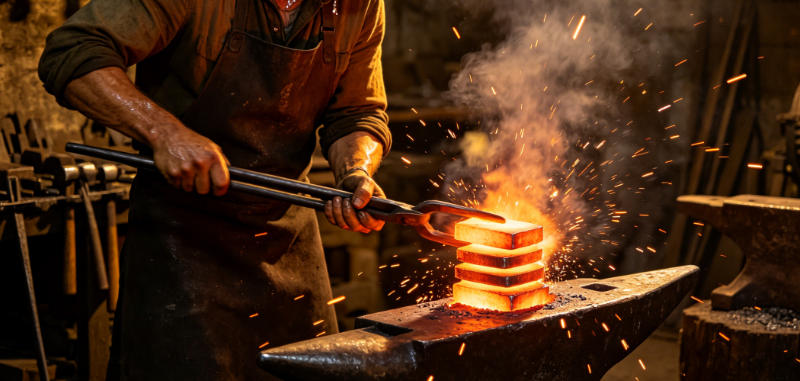
Modern Damascus steel is usually created through a process called forge welding.
The basic process includes:
1. Selecting Different Steel Layers
A craftsman combines different types of steel, often choosing materials with different carbon levels or properties. Common combinations may include high-carbon steel and stainless steel.
2. Stacking and Welding
Multiple layers of steel are stacked together and heated at extremely high temperatures. The layers are then forge welded into a single piece of metal.
3. Folding and Reforging
The steel block can be folded, stretched, and welded repeatedly. This process creates hundreds or even thousands of layers inside the blade.
4. Creating the Damascus Pattern
After forging, grinding, polishing, and acid etching reveal the internal layered structure. This creates the famous Damascus patterns, including:
- Wave patterns
- Twist patterns
- Ladder patterns
- Raindrop patterns
- Feather patterns
The final appearance depends on the steel combination, forging technique, and craftsmanship of the maker.
Why Does Damascus Steel Have Patterns?
The unique appearance of Damascus steel patterns is one of the biggest reasons collectors love this material.
The patterns are created because different layers of steel react differently during the finishing process. When the blade is polished and etched, the contrast between the steel layers becomes visible.
Common Damascus steel patterns include:
Twist Damascus
A spiral-like pattern created by twisting layered steel during forging.
Ladder Damascus
A pattern resembling horizontal steps or a ladder.
Feather Damascus
A detailed feather-like design created through complex manipulation of layered steel.
Raindrop Damascus
A pattern featuring rounded shapes similar to water drops.
These patterns are not simply painted or engraved onto the blade. In quality Damascus steel, the patterns are part of the actual steel structure.
This is why authentic Damascus blades are considered both functional tools and works of art.
Damascus Steel Properties: Is Damascus Steel Strong?
Many people ask: Is Damascus steel stronger than regular steel?
The answer depends on the specific materials and heat treatment used.
Modern Damascus steel can provide excellent:
- Edge retention
- Toughness
- Flexibility
- Durability
- Corrosion resistance (depending on steel type)
- Unique visual appearance
However, Damascus steel is not automatically stronger than all other steels. Blade performance depends on:
- Steel composition
- Heat treatment
- Forging quality
- Blade geometry
- Manufacturing skill
A well-made carbon steel blade can outperform a poorly made Damascus blade. The quality of craftsmanship is just as important as the material itself.
For collectors, Damascus steel is valued not only because of performance but also because each blade has a unique handcrafted appearance.
Damascus Steel vs Carbon Steel: Which Is Better?
The comparison between Damascus steel vs carbon steel is common among knife and sword enthusiasts.
Damascus Steel
Advantages:
- Unique layered patterns
- Artistic appearance
- Excellent craftsmanship value
- Popular for custom blades
- Strong collector appeal
Disadvantages:
- Usually more expensive
- Requires proper maintenance
- Quality varies between manufacturers
Carbon Steel
Advantages:
- Excellent hardness potential
- Good edge retention
- Easier maintenance and production
- Popular for functional swords and knives
Disadvantages:
- Usually lacks decorative patterns
- May require protection against rust
Neither material is universally better. The right choice depends on whether the priority is performance, appearance, historical style, or collection value.
For decorative and collectible swords, Damascus steel katana and Damascus swords are especially popular because they combine traditional sword aesthetics with modern craftsmanship.

Damascus Steel vs Stainless Steel
Another common question is Damascus steel vs stainless steel — what is the difference?
Stainless steel is designed mainly for corrosion resistance, while Damascus steel focuses on layered construction and visual patterns.
Modern Damascus steel may contain stainless steel layers, but not all Damascus steel is stainless.
The main differences include:
| Feature | Damascus Steel | Stainless Steel |
|---|---|---|
| Main feature | Layered patterns | Rust resistance |
| Appearance | Unique patterns | Clean uniform finish |
| Craftsmanship | Usually handmade | Often mass produced |
| Common use | Custom knives, swords | Everyday tools |
For collectors and sword enthusiasts, Damascus steel is often preferred because of its craftsmanship and artistic value.
How to Identify Real Damascus Steel
With the popularity of Damascus blades, many people ask:
Is Damascus steel real or fake?
Authentic Damascus steel should have patterns that continue through the steel structure rather than simply being printed or laser engraved on the surface.
Signs of quality Damascus steel include:
- Natural layered patterns
- Consistent craftsmanship
- Proper forging marks
- Clear material information
- Professional heat treatment
Fake Damascus blades may only have decorative surface patterns without real layered construction.
When buying a Damascus steel sword, Damascus katana, or handmade Damascus knife, always consider the reputation of the maker and the details of the forging process.
Damascus Steel for Swords and Modern Collectors
Today, Damascus steel remains one of the most popular materials for custom swords, knives, and collectible weapons.
A Damascus steel sword combines historical inspiration with modern craftsmanship. Many collectors choose Damascus blades because every sword has a unique pattern and artistic character.
Popular Damascus products include:
- Damascus steel katana
- Handmade Damascus swords
- Custom Damascus knives
- Viking Damascus swords
- Medieval Damascus swords
- Japanese-inspired Damascus blades
When choosing a Damascus sword, collectors should look at:
- Steel quality
- Full tang construction
- Heat treatment
- Blade balance
- Craftsmanship
- Historical design accuracy
A high-quality Damascus blade is not only a weapon or tool but also a piece of craftsmanship that reflects centuries of metalworking tradition.
Conclusion: Why Is Damascus Steel Still Popular Today?
From ancient Wootz steel blades to modern handmade Damascus swords, Damascus steel continues to fascinate people because of its combination of beauty, craftsmanship, and history.
Its legendary patterns, unique forging process, and cultural significance make it different from ordinary steel. While Damascus steel is not automatically stronger than every other material, a well-made Damascus blade represents a balance between performance, artistry, and tradition.
Whether you are searching for what is Damascus steel, how Damascus steel is made, real Damascus steel vs fake Damascus, or a Damascus steel sword for collection, understanding its history and properties helps you appreciate why this legendary material remains one of the most admired blade materials in the world.
