Samurai Weapons Explained: Katana, Spears, Bows & Japanese Armor Guide
- von liqinliqin
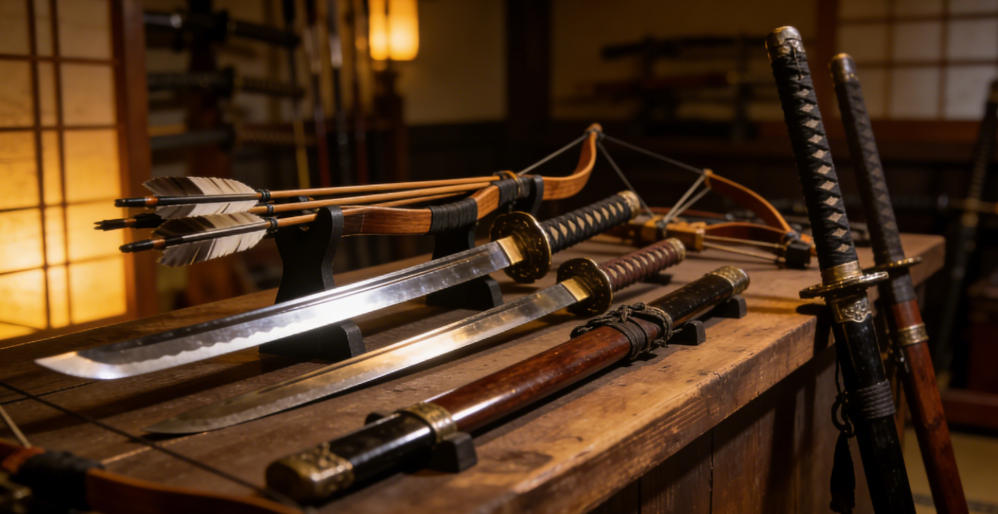
What Weapons Did Samurai Actually Use in Battle and How Did Their Full Arsenal Work in Feudal Japan Warfare?
Introduction: Understanding Samurai Weapons in Feudal Japan
When people search what weapons did samurai use or samurai weapons list explained, they usually think only about the katana. In reality, samurai weapons were part of a complete Japanese arms and armor system that evolved over centuries of feudal Japan warfare.
Samurai were elite warriors who relied on a wide range of weapons including Japanese swords, spears, bows, polearms, early firearms, and tactical tools, all supported by highly engineered samurai armor designed for both protection and mobility.
To understand samurai weapons history, you need to look at how each weapon worked in different battlefield situations, from mounted cavalry combat to close-range duels and siege warfare.
The Samurai Arsenal Was a Complete Battlefield System
The samurai did not rely on a single weapon like many modern depictions suggest. Instead, the samurai combat system was built around adaptability, with different samurai weapons used depending on distance, terrain, and enemy type.
The most important weapons in Japanese feudal warfare included katana samurai sword, tachi sword, wakizashi short sword, tanto dagger, yari spear, naginata polearm, yumi Japanese bow, and tanegashima matchlock gun.
This full Japanese weapons system allowed samurai warriors to fight effectively in both open battlefield samurai warfare and close-quarters combat situations.

Katana: The Iconic Samurai Sword of Bushido
The katana is the most famous Japanese sword and one of the most searched terms in samurai sword history. It represents samurai honor, Bushido code, and personal identity of the warrior class.
The katana sword features a curved single-edged blade designed for fast draw combat known as iaijutsu and powerful cutting efficiency in close combat samurai duels.
Although widely recognized as the main samurai weapon, the katana was actually one part of a broader Japanese sword system rather than the only battlefield tool.
Tachi: The Original Samurai Cavalry Sword
Before the katana became dominant, the tachi sword was the primary weapon of samurai cavalry in early feudal Japan.
The tachi is longer and more curved than the katana and was worn edge down from the belt, making it ideal for mounted samurai warfare and cavalry sword techniques.
In samurai weapons evolution, the tachi represents the early stage of Japanese sword development before battlefield tactics shifted toward infantry combat.
Wakizashi and Tanto: Close Combat Samurai Sidearms
The wakizashi samurai short sword was part of the famous daisho system, where samurai carried both long and short swords together.
The wakizashi was used for indoor combat, close quarters fighting, and as a backup weapon when the katana could not be used effectively in tight environments such as castles or narrow corridors.
The tanto dagger was even smaller and used for self defense, armor gap attacks, and utility purposes in survival situations.
Together, wakizashi and tanto weapons ensured samurai could fight in any close combat scenario.
Yari: The Dominant Samurai Spear in Battlefield Warfare
The yari spear was one of the most important samurai weapons during the Sengoku period, when large scale Japanese warfare became common.
Unlike swords, yari spear weapons provided long reach advantage, formation fighting capability, and high armor penetration power against enemy samurai armor.
In many samurai army formations, yari infantry units formed the backbone of battlefield strategy, making the spear one of the most effective Japanese weapons in open warfare.
Naginata: The Curved Blade Polearm Weapon
The naginata is a polearm weapon with a curved blade mounted on a long shaft, designed for sweeping attacks and defensive battlefield control.
In samurai weapons history, the naginata was used for anti cavalry combat, crowd control, and protecting positions during battles.
It was also widely used by warrior monks and later became associated with female samurai warriors, making it one of the most versatile Japanese polearms.
Yumi: The Traditional Samurai Longbow
The yumi Japanese bow was one of the earliest samurai weapons and played a central role in mounted archery warfare in early feudal Japan.
Samurai archers used the yumi longbow from horseback, allowing long range attacks before switching to spears or swords in close combat.
The yumi represents the origins of samurai warfare, where ranged combat was more important than melee sword fighting.

Firearms: Tanegashima Matchlock Guns in Samurai Warfare
During the Sengoku period, Japanese warfare changed with the introduction of the tanegashima matchlock gun, also known as samurai guns or early firearms in Japan.
These firearms introduced long range projectile warfare and gradually changed battlefield tactics, although traditional samurai swords and spears remained essential for close combat situations.
The combination of firearms, yari spears, and katana swords created a highly flexible samurai combat system.
Samurai Armor: Protection System of Japanese Warriors
Samurai armor was just as important as samurai weapons in battlefield survival. Known as yoroi or gusoku, samurai armor was designed for mobility, protection, and endurance.
A full samurai armor set included kabuto helmet, do chest armor, kote arm guards, and suneate leg protection, all reinforced with iron plates, leather, and silk lacing.
This armor system allowed samurai warriors to survive both ranged attacks from bows and firearms as well as close combat sword strikes.
Daisho System: Samurai Identity Through Dual Swords
The daisho system refers to the traditional pairing of katana and wakizashi, which symbolized samurai status and legal identity in feudal Japan.
Only samurai class warriors were allowed to carry this dual sword system, making katana wakizashi combination a powerful symbol of social rank, authority, and Bushido warrior identity.
How Samurai Used Multiple Weapons in Battle Strategy
Samurai did not rely on a single weapon but switched between different Japanese weapons depending on battlefield conditions.
In long range combat, samurai used yumi bows or matchlock firearms. In mid range warfare, yari spears and naginata polearms were dominant. In close combat situations, katana swords and wakizashi were primary weapons, while tanto daggers were used in emergency survival combat.
This multi weapon samurai combat system made Japanese warriors extremely adaptable in feudal Japan warfare.
Evolution of Samurai Weapons Through Japanese History
Samurai weapons evolved significantly over time as warfare changed in Japan.
In early periods, yumi archery dominated samurai combat. During the Heian and Kamakura periods, tachi cavalry swords became standard. In the Sengoku period, yari spears and firearms dominated large scale battles. In later Edo periods, katana became more symbolic and ceremonial.
This evolution of samurai weapons history reflects Japan’s shift from mounted warfare to infantry based combat systems.
Why Samurai Weapons Still Fascinate the Modern World
Samurai weapons remain extremely popular today due to their connection with Japanese history, Bushido philosophy, advanced metallurgy, and influence in anime, movies, and video games.
People continue searching for strongest samurai weapons, Japanese sword types explained, real samurai sword history, and samurai armor and weapons guide because these topics combine history, culture, and martial art legacy.
Conclusion: The Complete Samurai Weapons System Explained
The question what weapons did samurai use cannot be answered with a single sword like katana. Samurai weapons were a complete battlefield system including katana, tachi, wakizashi, tanto, yari, naginata, yumi bow, matchlock firearms, and full samurai armor.
Each weapon had a specific role in Japanese feudal warfare, creating one of the most advanced and flexible warrior systems in history.
From long range archery to close combat sword fighting, samurai weapons history represents a perfect balance of strategy, craftsmanship, and battlefield adaptation that continues to influence global culture today.
