Misericorde Dagger Explained: Medieval Armor-Piercing Blade of Mercy
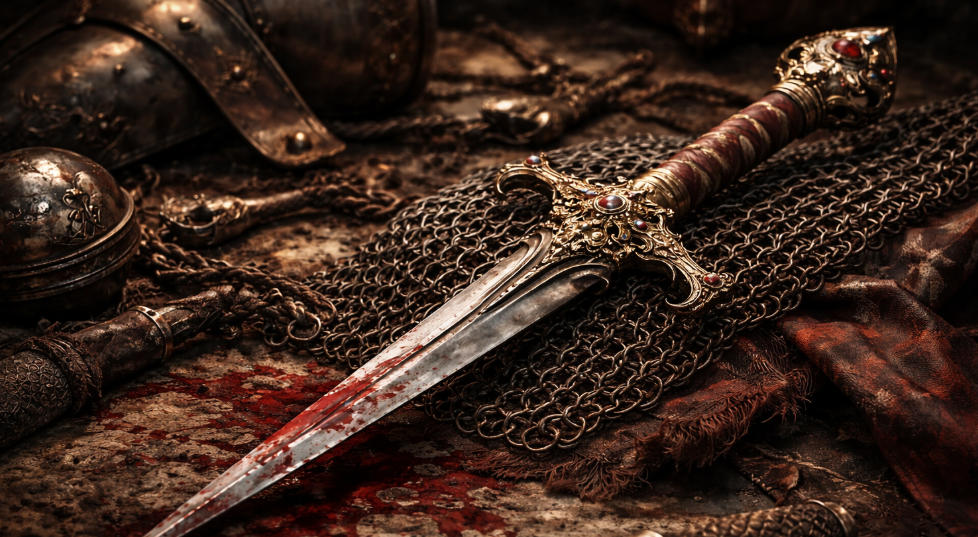
What Is a Misericorde Dagger and Why Was It Used as the Blade of Mercy in Medieval Warfare?
What Is a Misericorde? The Forgotten Medieval 'Blade of Mercy'
The misericorde dagger, also widely searched as medieval armor piercing dagger, knight finishing dagger, and blade of mercy weapon, is one of the most specialized close-combat weapons of the Middle Ages.
Its name comes from the Latin word misericordia, meaning 'mercy.' Despite the gentle meaning, the weapon itself was designed for a brutally practical purpose: to finish wounded armored knights on the battlefield when swords and axes could no longer penetrate heavy armor.
In modern search trends, it is often associated with keywords such as:
- medieval dagger history explained
- armor piercing dagger for knights
- medieval coup de grâce weapon
- historical close combat dagger
- knight secondary weapon medieval warfare
This dual identity—mercy and lethality—makes the misericorde one of the most fascinating weapons in European medieval history.
Origins of the Misericorde Dagger in Medieval Warfare
The misericorde first appeared during the High Middle Ages (12th–14th century), when European warfare underwent a major transformation. The rise of full plate armor and chainmail protection made traditional cutting weapons less effective.
Knights needed a backup weapon specifically designed for:
- Close-quarter combat situations
- Grappling fights between armored warriors
- Finishing wounded enemies
- Exploiting armor weak points
This led to the development of the misericorde, a long, thin, rigid thrusting dagger built purely for penetration rather than cutting.
Unlike decorative sidearms, it was a purely functional battlefield survival tool carried by knights, men-at-arms, and elite warriors.

Armor-Piercing Design: Why the Misericorde Was So Effective
The misericorde dagger is often described in modern SEO searches as an armor piercing medieval dagger or anti-plate armor stabbing weapon.
Its design focused entirely on penetration efficiency:
- Long, narrow blade optimized for thrusting
- Triangular or square cross-section for rigidity
- Extremely sharp point for exploiting armor gaps
- Minimal cutting edge (almost no slicing function)
This allowed the weapon to target weak points in armor such as:
- Helmet eye slits
- Armpit joints
- Neck openings
- Groin and underarm gaps
In medieval close combat, even heavily armored knights were vulnerable once knocked to the ground, and the misericorde became the perfect finishing weapon for armored warfare scenarios.
The Role of the Misericorde in the 'Coup de Grâce'
One of the most historically significant uses of the misericorde was delivering the coup de grâce, meaning “stroke of mercy.”
In medieval battlefield conditions:
- Injured soldiers often could not be saved
- Medical treatment was extremely limited
- Survival chances were extremely low after armor penetration wounds
The misericorde was used to:
- End suffering quickly and decisively
- Finish incapacitated enemies
- Prevent prolonged battlefield agony
- Ensure tactical efficiency in combat zones
This is why it became known as the 'blade of mercy,' even though its purpose was deeply lethal. The “mercy” referred to ending suffering—not sparing life.
Misericorde vs Other Medieval Daggers and Knight Weapons
The misericorde is often compared with other historical daggers, but it served a very specific niche role in medieval combat systems.
- Rondel dagger: more versatile, used for general stabbing combat
- Stiletto dagger: later design focused on stealth and assassination
- Misericorde dagger: specialized armor-piercing finishing weapon
Unlike other blades, the misericorde was not meant for dueling style combat or utility work. It was a battlefield execution tool designed for armored opponents.
This specialization makes it one of the earliest known examples of a dedicated anti-armor dagger in European military history.
Who Used the Misericorde? Knights, Soldiers, and Elite Warriors
The misericorde was primarily associated with:
- Medieval knights
- Armored cavalry units
- Elite foot soldiers
- Tournament combat participants
It was usually carried alongside:
- Longswords
- Shields
- Polearms
- Mail or plate armor sets
Because it was compact and easy to draw in close combat, it became an essential secondary weapon for knights in medieval warfare strategy.

Cultural Meaning and Symbolism of the Misericorde
Although extremely practical, the misericorde also carried symbolic meaning in medieval society.
It represented:
- Martial discipline and knightly duty
- The harsh reality of medieval warfare
- The controlled application of lethal force
- Honor-based combat decisions
In some cases, it was even used in tournaments or judicial duels, reinforcing its role as a symbol of knightly authority and combat resolution.
Misericorde in Modern Popular Culture and Gaming
Today, the misericorde continues to appear in:
- Medieval history documentaries
- Fantasy RPG and MMORPG weapon systems
- Sword and dagger museum collections
- Historical reenactment communities
- Medieval combat simulations
In modern gaming and fantasy contexts, it is often portrayed as:
- High critical damage dagger
- Stealth assassination weapon
- Armor-penetration bonus blade
- Backstab-focused melee weapon
This modern interpretation closely reflects its historical role as a precision finishing weapon rather than a general-purpose dagger.
Conclusion: Why the Misericorde Remains an Icon of Medieval Warfare
The misericorde dagger is more than just a medieval weapon—it is a symbol of how warfare evolved to counter armor technology.
As one of the most iconic armor-piercing medieval daggers, it represents:
- The adaptation of knights to plate armor warfare
- The brutal efficiency of close-range combat
- The historical concept of battlefield mercy
- The evolution of specialized secondary weapons
Even today, it remains highly searched under terms like medieval dagger history, armor piercing knight weapon, and blade of mercy explained, proving its lasting fascination in both historical study and popular culture.
